
In an era dominated by cloud accounting platforms and AI-powered ERPs, Tally continues to be a backbone of accounting operations for millions of Indian businesses. From micro enterprises to large mid-sized organizations, companies still rely heavily on Tally for day-to-day accounting, statutory compliance, and financial control. This dependence is not accidental. It is driven by a combination of regulatory alignment, operational efficiency, and cost-effectiveness that few systems match in the Indian context.
This article explores the top 3 reasons why companies still rely on Tally, backed by figures, practical insights, and real-world business use cases. The discussion is structured for clarity, depth, and SEO performance, making it ideal for business owners, accountants, students, and finance professionals.
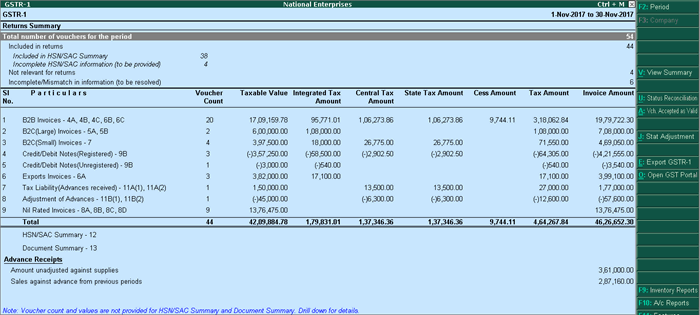
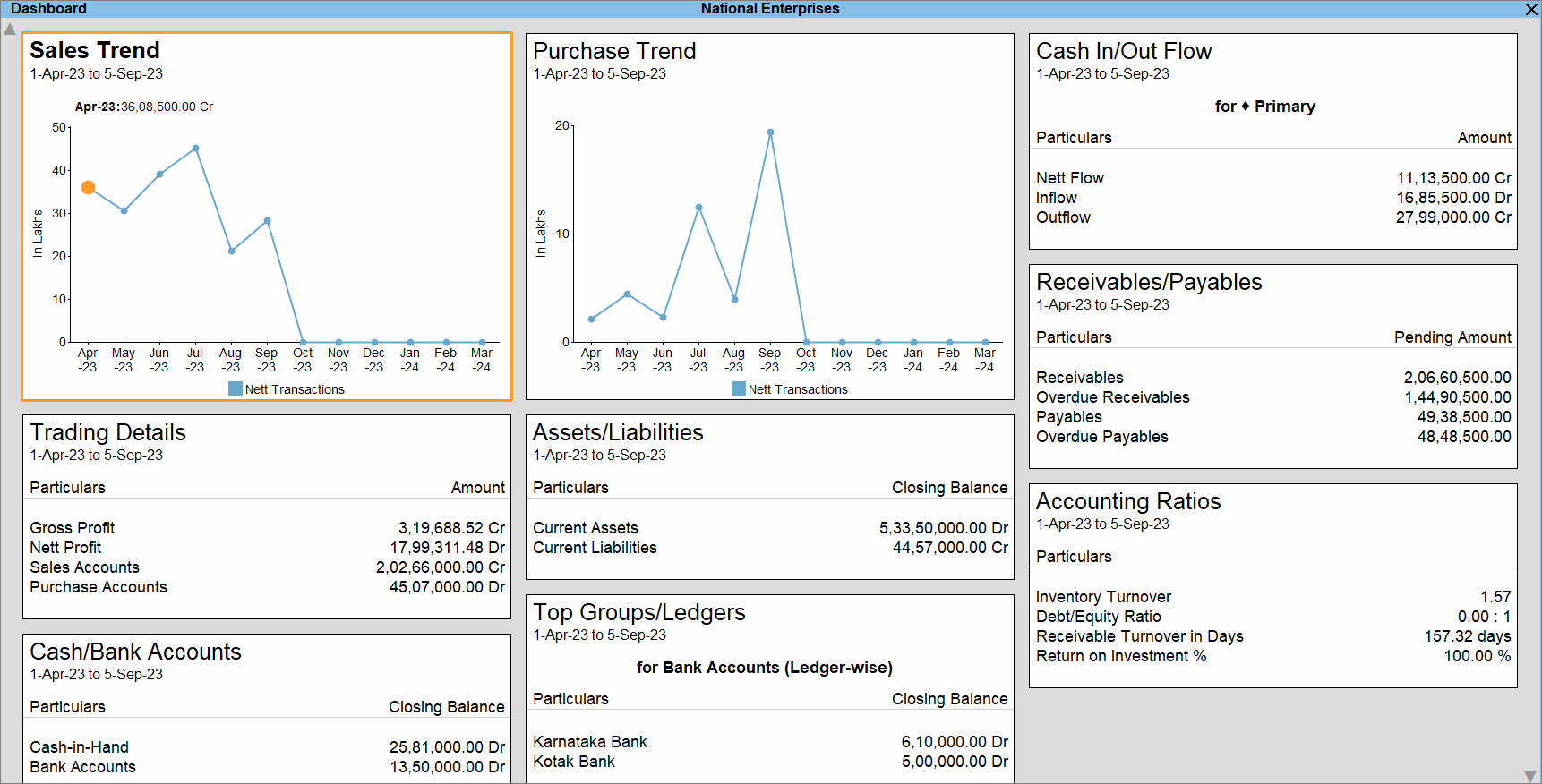
Why Tally Still Dominates the Indian Accounting Landscape
Developed by Tally Solutions, Tally has been in continuous use in India for over three decades. Industry estimates suggest that more than 7 million businesses actively use Tally across manufacturing, trading, services, and non-profit sectors. Even with the rise of cloud accounting tools, Tally’s offline-first stability and India-centric design keep it deeply relevant.
Below are the three most powerful reasons behind this continued reliance.
Reason 1: Deep Alignment with Indian Taxation and Statutory Compliance
Built Specifically for Indian Laws
One of the strongest reasons companies rely on Tally is its native alignment with Indian taxation systems. Tally is not a generic global accounting tool adapted for India; it is built from the ground up for Indian compliance.
Tally supports:
- GST (CGST, SGST, IGST, UTGST)
- TDS and TCS
- Income Tax computation basics
- Statutory audit requirements
- MSME compliance tracking
As of recent financial years, India has over 1.4 crore GST-registered businesses, many of which must file monthly or quarterly returns. Tally simplifies this by automating tax calculations and maintaining audit-ready records.
Compliance Accuracy Reduces Risk
Manual compliance errors are among the top reasons for tax notices and penalties. Tally minimizes this risk through:
- Automated GST classification
- Real-time tax calculation
- Consistent ledger structure
- Error detection during return preparation
Compliance Advantage at a Glance
| Aspect | Tally Strength |
|---|---|
| GST Returns | Automated, structured, audit-ready |
| Tax Accuracy | Rule-based calculations |
| Audit Support | Ledger-level traceability |
For companies operating in India, compliance is not optional. Tally’s compliance-first architecture is a decisive advantage.
Reason 2: Simplicity, Speed, and Operational Control
Designed for Accountants, Not Just IT Teams
Tally’s interface prioritizes keyboard-driven speed and logical workflows, which is why experienced accountants can complete complex tasks in minutes. Unlike many modern systems that rely heavily on mouse navigation and layered menus, Tally enables rapid data entry and report access.
Key productivity facts:
- Voucher entry can be completed 30–40% faster compared to mouse-heavy systems
- Trial balance, P&L, and balance sheet are available instantly without processing delays
- Large datasets (5–10 years of transactions) run smoothly on standard hardware
Offline Reliability Matters
Despite increased internet penetration, many Indian businesses still face:
- Unstable connectivity
- Data privacy concerns
- Power and bandwidth constraints
Tally’s offline-first model ensures uninterrupted work. Businesses can operate independently of the internet and sync data only when required.
Real-Time Financial Visibility
Tally provides instant access to:
- Outstanding receivables and payables
- Stock summaries
- Cost center performance
- Cash and bank positions
This level of real-time control helps owners make faster decisions without waiting for month-end reports.
Reason 3: Cost Efficiency and Long-Term ROI
Lower Total Cost of Ownership
For many small and mid-sized businesses, cost is a deciding factor. Tally offers a one-time licensing model, which contrasts sharply with recurring subscription-based software.
Typical cost advantages include:
- No mandatory monthly fees
- Minimal hardware requirements
- Lower training costs due to widespread familiarity
- Easy availability of skilled Tally operators
Over a 5-year period, businesses often report 30–50% lower accounting software costs when using Tally compared to cloud subscription models.
Talent Availability Reduces Dependency Risk
India has an estimated 8–10 million accounting professionals with some level of Tally exposure. This means:
- Faster hiring
- Lower training investment
- Reduced dependency on specialized consultants
Cost Comparison Snapshot
| Cost Factor | Tally |
|---|---|
| Licensing | One-time |
| Training | Widely available |
| Upgrades | Controlled and optional |
For cost-conscious organizations, this predictability is invaluable.
Additional Reasons That Reinforce Tally’s Relevance
Customization Without Complexity
- User-defined reports
- Cost centers and categories
- Voucher-level control
- Simple configuration instead of heavy coding
Data Ownership and Security
- Data stored locally
- Full control over backups
- Reduced exposure to cloud-based breaches
Scalability for Growing Businesses
Many companies start with basic accounting and later expand into:
- Inventory management
- Payroll
- MIS reporting
- Branch accounting
All within the same system.
Frequently Asked Questions (FAQ)
1. Why do companies still rely on Tally despite modern cloud accounting software?
Companies rely on Tally because it is deeply aligned with Indian compliance, works offline, offers fast performance, and has a lower long-term cost compared to subscription-based tools.
2. Is Tally suitable only for small businesses?
No. Tally is widely used by medium and large organizations for multi-branch accounting, inventory management, and statutory reporting.
3. How does Tally help with GST compliance?
Tally automates GST calculations, maintains structured tax data, and prepares return-ready reports, reducing errors and compliance risks.
4. Does Tally require internet connectivity?
No. Tally works completely offline, which is a major advantage in areas with unreliable internet access.
5. Is Tally still relevant for accountants in 2026 and beyond?
Yes. Tally remains relevant due to its strong compliance framework, speed, and continued adoption by Indian businesses.
6. What makes Tally cost-effective compared to other accounting software?
Its one-time licensing model, low training costs, and minimal infrastructure requirements make it highly cost-efficient.
7. Can Tally handle inventory along with accounting?
Yes. Tally integrates inventory management with accounting, enabling real-time stock valuation and cost tracking.
Conclusion
The continued reliance on Tally is not due to resistance to change but due to practical business logic. Its unmatched compliance support, operational simplicity, and cost efficiency make it a trusted accounting backbone for Indian companies. While technology evolves, businesses prioritize reliability, control, and legal alignment—areas where Tally continues to deliver consistently.
Disclaimer
This article is intended for educational and informational purposes only. The figures and operational insights mentioned are based on industry observations and practical usage patterns. Software suitability may vary depending on business size, industry, and regulatory requirements. Readers should evaluate accounting solutions based on their specific operational needs.