Category: Economic News

  • E20 Petrol Rollout in India: Everything Vehicle Owners Must Know

    E20 Petrol Rollout in India: Everything Vehicle Owners Must Know

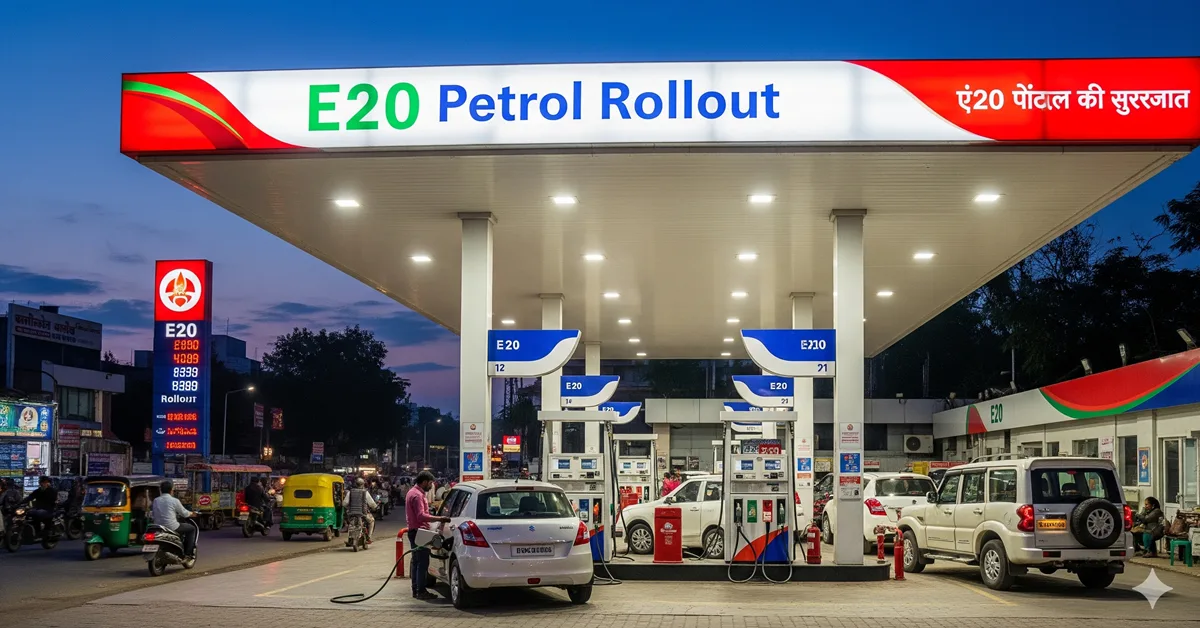
    India is making a major transition towards greener fuel with the rollout of E20 petrol, a fuel blend containing 20% ethanol and 80% petrol. This shift is part of the government’s plan to reduce dependence on imported oil, boost farmer income, and cut carbon emissions. While the initiative brings multiple benefits, it also comes with certain concerns for vehicle owners, especially those with older vehicles.


    📅 Key Highlights of the E20 Petrol Rollout

    FeatureDetails
    Ethanol Content20%
    Petrol Content80%
    Launch Year2025
    Primary ObjectiveReduce carbon emissions and import dependency
    Target CoverageNearly 90,000 fuel stations across India
    Vehicle CompatibilityBS6 and newer vehicles recommended

    ✅ Benefits of E20 Petrol

    1. Environmental Benefits
      • Reduces carbon emissions significantly compared to traditional petrol.
      • Higher octane number (≈108.5) improves combustion efficiency, lowering pollutants.
    2. Economic Advantages
      • Expected savings of ₹43,000 crore annually in foreign exchange by reducing crude oil imports.
      • Creation of a new revenue stream for farmers, projected to generate ₹40,000 crore in income for 2025.
    3. Boost to Agriculture
      • Ethanol is primarily derived from sugarcane, corn, and other crops, increasing farmer income and promoting rural development.
    4. Fuel Security
      • E20 reduces reliance on imported crude, strengthening India’s energy independence.

    ⚠️ Concerns and Challenges

    1. Compatibility with Older Vehicles
      • Vehicles manufactured before 2023 may not be fully compatible with E20 fuel.
      • Potential issues:
        • Reduced Mileage: Fuel efficiency can drop by 5% to 20% in older engines.
        • Engine Wear: Ethanol can damage rubber seals, plastic parts, and fuel lines.
    2. Performance Variations
      • While newer vehicles may see improved combustion, older engines may experience slight drops in acceleration and overall performance.
    3. Limited Choice of Fuel Blends
      • With the nationwide rollout, consumers may not have the option to choose lower ethanol blends like E10, leading to adjustment challenges for some vehicles.

    🛠️ What Vehicle Owners Should Do

    StepRecommendation
    Check CompatibilityConsult the vehicle manual or manufacturer for E20 suitability.
    Monitor MileageKeep track of fuel efficiency to detect performance issues.
    Regular MaintenanceInspect rubber seals, fuel lines, and plastic components regularly.
    Upgrade if NeededOlder vehicles may benefit from engine modifications or upgrades for E20 use.
    Stay UpdatedFollow government notifications for any technical advisories.

    📊 Key Takeaways

    AspectAdvantage / Concern
    Emission ReductionUp to 30% lower than traditional petrol
    Farmer IncomePotential increase of ₹40,000 crore
    Foreign Exchange SavingsApprox. ₹43,000 crore per year
    Vehicle CompatibilityBS6 and newer vehicles recommended
    Fuel Efficiency Impact5%–20% drop in older vehicles
    Performance ChangesSlight reduction in older engines; improved efficiency in new engines

    🔍 Conclusion

    The E20 petrol rollout is a landmark step in India’s push for sustainable fuel and energy independence. While it provides significant environmental and economic benefits, vehicle owners—particularly those with older cars—must take precautions to ensure compatibility and maintain performance. Regular maintenance, careful monitoring of mileage, and consultation with manufacturers will ensure a smooth transition to this greener fuel option.

    By adopting E20 petrol, India is not only reducing carbon emissions but also supporting farmers, creating rural income, and strengthening fuel security for the nation.


  • Fuel Ban on Overage Vehicles in Delhi-NCR: What You Need to Know

    In a significant move to combat air pollution, the Commission for Air Quality Management (CAQM) has announced a ban on fuel supply to end-of-life (EOL) vehicles in Delhi and five neighboring districts of the National Capital Region (NCR). This policy is set to take effect on November 1, 2025.


    📅 Key Details

    • Effective Date: November 1, 2025
    • Affected Areas: Delhi, Gurugram, Faridabad, Ghaziabad, Gautam Budh Nagar, and Sonipat
    • Vehicle Categories Affected:
      • Diesel vehicles older than 10 years
      • Petrol vehicles older than 15 years
    • Enforcement Mechanism: Fuel stations will utilize Automated Number Plate Recognition (ANPR) systems to identify and deny fuel to non-compliant vehicles.

    🛠️ Enforcement and Implementation

    The implementation of this ban has been postponed from the initial date of July 1, 2025, to November 1, 2025, to address operational and infrastructural challenges. The delay allows for the installation and calibration of ANPR systems at fuel stations and ensures better coordination among enforcement agencies. The ban will be enforced uniformly across Delhi and the five NCR districts to avoid any cross-border fueling issues.


    ⚠️ Penalties for Non-Compliance

    Vehicles found violating the fuel ban will face strict penalties, including:

    • Denial of Fuel: Immediate refusal of fuel at petrol stations.
    • Fines: Monetary penalties as prescribed under the Registered Vehicle Scrapping Facility (RVSF) Rules, 2021.
    • Impoundment: Seizure of vehicles found in violation, leading to potential scrapping.

    🚗 Impact on Vehicle Owners

    Owners of EOL vehicles are advised to take the following steps:

    • Verify Vehicle Age: Check the registration certificate to confirm the vehicle’s age.
    • Consider Scrapping: Explore options for scrapping the vehicle through authorized centers.
    • Upgrade to Cleaner Alternatives: Consider transitioning to electric or CNG vehicles to comply with environmental standards.

    📊 Summary Table

    Vehicle TypeAge LimitAffected AreasEnforcement Date
    Diesel>10 yearsDelhi, Gurugram, Faridabad, Ghaziabad, Gautam Budh Nagar, SonipatNovember 1, 2025
    Petrol>15 yearsDelhi, Gurugram, Faridabad, Ghaziabad, Gautam Budh Nagar, SonipatNovember 1, 2025

    ❓ Frequently Asked Questions (FAQs)

    Q1: What is an end-of-life (EOL) vehicle?

    An EOL vehicle is one that has surpassed its recommended lifespan, making it more prone to emissions and less fuel-efficient.

    Q2: How will the fuel ban be enforced?

    Fuel stations will use ANPR systems to identify EOL vehicles and deny them fuel.

    Q3: Are there any exemptions to this ban?

    Currently, the ban applies to all diesel and petrol vehicles exceeding the specified age limits.

    Q4: What should I do if my vehicle is affected?

    Consider scrapping the vehicle through authorized centers or upgrading to a cleaner alternative like an electric or CNG vehicle.


    The implementation of the fuel ban on EOL vehicles is a crucial step towards improving air quality in Delhi-NCR. Vehicle owners are encouraged to comply with the new regulations to contribute to a cleaner and healthier environment.


  • India Advances Towards Historic ₹2 Lakh Crore Deal for 114 ‘Made in India’ Rafale Jets

    India is moving forward with a historic defense procurement proposal for 114 Rafale fighter jets, in collaboration with French aerospace giant Dassault Aviation. Valued at over ₹2 lakh crore, this initiative not only strengthens the Indian Air Force’s (IAF) operational capabilities but also aligns with the ‘Make in India’ policy, emphasizing domestic production and technological self-reliance.

    The deal is under review by the Ministry of Defence, and if approved, it will mark one of the largest defense acquisitions in India’s history.


    Overview of the Proposed Rafale Deal

    ParameterDetails
    Total Jets114 Rafale fighter jets
    Estimated ValueOver ₹2 lakh crore
    Indigenous ContentOver 60% produced in India
    ManufacturersDassault Aviation (France) and Indian aerospace firms
    Existing Fleet36 Rafale jets already in service with IAF
    Additional Orders26 Rafale Marine jets for Indian Navy

    Key Takeaways:

    • This acquisition will expand the IAF’s fleet significantly.
    • Domestic production will boost Make in India initiatives.
    • Strategic collaboration with French aerospace companies ensures advanced technology transfer.

    Strategic Objectives

    1. Boosting Indigenous Manufacturing

    • Over 60% of the components of these jets will be manufactured in India.
    • Enhances self-reliance in defense production.
    • Reduces dependence on foreign suppliers, supporting national security.

    2. Enhancing Operational Capabilities

    • Advanced Rafale jets feature state-of-the-art avionics, weapons systems, and stealth technology.
    • Fleet expansion strengthens combat readiness and air dominance.

    3. Job Creation & Technological Advancement

    • Collaboration with Indian firms is expected to generate thousands of jobs.
    • Technology transfer will foster innovation in the domestic defense sector.
    • Example: Safran Aerospace plans a new facility in Hyderabad for engine maintenance, creating 150 jobs initially, potentially expanding to 750 jobs.

    Procurement Process

    StepDescription
    Ministry ReviewThe Defence Ministry reviews the proposal and assesses feasibility.
    Defence Finance DivisionEvaluates financial implications of the deal.
    Defence Procurement Board (DPB)Discusses technical and operational aspects of the proposal.
    Defence Acquisition Council (DAC)Chaired by Defence Minister for final approval.

    Once approved, this deal will be a milestone in India’s defense modernization.


    Broader Implications

    AreaImpact
    Bilateral TiesStrengthens India-France defense collaboration.
    National SecurityEnhances India’s combat capabilities and strategic deterrence.
    Defense IndustryEncourages domestic manufacturing and technology innovation.
    EmploymentCreates skilled jobs across aerospace and defense sectors.

    This deal also reinforces India’s blue-water capabilities, especially with the Rafale Marine jets for carrier operations.


    FAQs

    1. How many Rafale jets are being proposed in this deal?

    • The proposal is for 114 jets, with over 60% produced in India.

    2. What is the estimated cost of the deal?

    • The deal is valued at over ₹2 lakh crore, making it one of the largest in Indian defense history.

    3. How does this deal support ‘Make in India’?

    • More than 60% of components will be manufactured domestically, promoting self-reliance and indigenous technology development.

    4. Will this improve India’s defense capabilities?

    • Yes, the addition of 114 advanced Rafale jets will significantly enhance combat readiness, operational flexibility, and air superiority.

    5. Are there any additional orders for the Indian Navy?

    • Yes, 26 Rafale Marine jets have already been ordered for carrier-based operations.

    6. When will the deal be finalized?

    • The proposal is under review, and it must pass through the Ministry of Defence, Defence Finance Division, DPB, and DAC before final approval.

    7. What impact will this deal have on jobs in India?

    • The deal is expected to generate thousands of jobs in aerospace manufacturing, maintenance, and defense technology sectors.

    Conclusion

    The proposed ‘Made in India’ Rafale deal represents a major step forward in strengthening India’s defense capabilities, boosting domestic manufacturing, and fostering strategic international partnerships.

    By combining advanced technology, domestic production, and skilled employment opportunities, this initiative embodies the vision of self-reliance in defense while preparing the IAF for future challenges.


  • Income Tax Law for Senior and Super Senior Citizens: Key Updates for AY 2025-26

    For the Assessment Year (AY) 2025-26, the Indian government has introduced several modifications to the Income Tax Act to provide financial relief to senior citizens (aged 60–79 years) and super senior citizens (aged 80 years and above). These changes aim to simplify tax compliance and enhance savings for the elderly population.


    📊 Income Tax Slabs for AY 2025-26

    Old Tax Regime

    Age GroupIncome Up to ₹3,00,000₹3,00,001 – ₹5,00,000₹5,00,001 – ₹10,00,000Above ₹10,00,000
    Senior Citizens (60–79)₹3,00,0005%20%30%
    Super Senior Citizens (80+)₹5,00,00020%30%–

    Note: The new tax regime does not offer higher exemption limits for senior or super senior citizens.


    💡 Key Benefits for Senior and Super Senior Citizens

    1. Higher Basic Exemption Limits

    • Senior Citizens (60–79 years): ₹3,00,000
    • Super Senior Citizens (80 years and above): ₹5,00,000

    These limits apply under the old tax regime and are higher than the standard exemption limit of ₹2,50,000 for individuals below 60 years.

    2. Form 15H for Non-Deduction of TDS

    Senior citizens can submit Form 15H to financial institutions to ensure that Tax Deducted at Source (TDS) is not deducted on interest income, provided their total income is below the taxable limit.

    3. Advance Tax Exemption

    Senior citizens without business income are exempt from paying advance tax, reducing the compliance burden.

    4. Standard Deduction

    A standard deduction of ₹50,000 is available for pension and salary income under the old tax regime.

    5. Enhanced Deductions Under Sections 80D, 80DD, and 80DDB

    • Section 80D: Higher deductions for health insurance premiums or medical expenses.
    • Section 80DD: Deductions for maintenance and treatment of dependents with disabilities.
    • Section 80DDB: Enhanced deductions for treatment of specified diseases.

    6. Interest Income Exemption

    A higher limit of exemption on interest from banks and post offices is available for senior citizens.

    7. Manual Filing Option

    Eligible senior citizens may file their income tax returns manually, providing convenience for those less familiar with digital platforms.

    8. Reverse Mortgage Income Tax Exemption

    Income from transferring property under the reverse mortgage scheme is tax-exempt, offering financial security to senior citizens.

    9. Exemption from Filing ITR

    Under specified conditions, some senior citizens are exempt from filing income tax returns, reducing administrative burdens.


    🧾 Filing Options: Old vs. New Tax Regime

    Senior and super senior citizens have the option to choose between the old and new tax regimes:

    • Old Tax Regime: Offers various exemptions and deductions but has higher tax rates.
    • New Tax Regime: Features lower tax rates but does not allow for exemptions and deductions.

    Taxpayers can opt for the regime that results in lower tax liability.


    ✅ Conclusion

    The updates to the Income Tax Act for AY 2025-26 provide significant benefits to senior and super senior citizens, aiming to ease their financial burdens and encourage savings. By understanding these provisions, elderly taxpayers can make informed decisions to optimize their tax liabilities.


  • National Lok Adalat 2025: A Nationwide Opportunity to Settle Traffic E-Challans

    On 13th September 2025, India is set to host the National Lok Adalat, a special initiative aimed at providing vehicle owners an opportunity to resolve their pending traffic e-challans. This nationwide event is organized to alleviate the burden on the judicial system by addressing minor traffic violations outside traditional courtrooms.


    📌 What is the National Lok Adalat?

    The National Lok Adalat is a forum established under the Legal Services Authorities Act, 1987, to facilitate the amicable settlement of disputes through conciliation and compromise. It serves as an alternative dispute resolution mechanism, offering a platform for resolving various types of cases, including traffic violations.


    ✅ Eligible Traffic Violations for Settlement

    Vehicle owners can avail themselves of this opportunity to settle the following common traffic violations:

    • Riding without a helmet
    • Not wearing a seat belt
    • Over-speeding
    • Illegal parking
    • Lack of Pollution Under Control (PUC) certificate
    • Driving without a valid license
    • Driving without a number plate
    • Driving in the wrong lane

    However, it’s important to note that serious offences such as:

    • Drunk driving
    • Hit-and-run incidents
    • Death caused by negligent driving
    • Driving by minors
    • Unauthorized racing or speed trials
    • Vehicles involved in criminal activities

    are excluded from this settlement initiative.


    📝 Step-by-Step Guide to Resolve Traffic E-Challans

    To make the most of the National Lok Adalat, follow these steps:

    1. Check Eligibility

    Ensure that your traffic violation is eligible for settlement under the National Lok Adalat. Only minor, compoundable offences are considered.

    2. Gather Necessary Documents

    Prepare the following documents:

    • Appointment letter (printed copy)
    • Token number
    • Original documents, including vehicle papers and challan receipts

    3. Register Online

    In cities like Delhi, Maharashtra, and Karnataka, vehicle owners can register online through their respective traffic police websites. Registration typically opens a few days before the event.

    4. Visit the Designated Court

    On the scheduled date, visit the designated court premises in your city. It’s advisable to arrive at least one hour before your allotted time. Some centres may also accept walk-in cases depending on availability.

    5. Settlement Process

    At the court, present your documents and challan details. A conciliator will assist in resolving the matter, and if eligible, you may receive a reduced fine or complete waiver.


    🏛️ Lok Adalat Sessions in Key Cities

    CityVenue(s)
    DelhiDwarka Court, Tis Hazari Court, Rohini Court, Rouse Avenue Court, Karkardooma Court, Patiala House Court, Saket Court
    MaharashtraSessions held across various districts and talukas
    KarnatakaSessions in cities like Mangaluru, Belthangady, Puttur, Moodbidri, and Sullia

    Please check with your local traffic police or district legal services authority for specific venues and timings.


    ⚠️ Important Considerations

    • Time Sensitivity: The National Lok Adalat is a one-day event. Ensure you attend on 13th September 2025.
    • Eligibility: Only minor, compoundable traffic violations are eligible for settlement.
    • Documentation: Carry all required documents to avoid delays.
    • State-Specific Rules: Procedures may vary by state. Confirm details with local authorities.

    💡 Benefits of Participating

    • Financial Relief: Avail discounts or waivers on pending fines.
    • Legal Compliance: Clear your record of minor traffic violations.
    • Judicial Efficiency: Help reduce the backlog of cases in the judicial system.

    📌 Conclusion

    The National Lok Adalat 2025 presents a valuable opportunity for vehicle owners across India to resolve their pending traffic e-challans efficiently and cost-effectively. By following the outlined steps and ensuring eligibility, you can take advantage of this initiative to settle your traffic violations and contribute to a more streamlined judicial process.

    Remember to check with your local traffic police or district legal services authority for specific details pertaining to your city.


  • Chaos at Yerwada Lok Adalat: Pune Citizens Rush for 50% Traffic Fine Waiver

    A special Lok Adalat session in Yerwada, Pune, intended to provide relief to thousands of motorists by offering a 50% waiver on pending traffic fines, spiraled into chaos as citizens crowded the venue. The promise of reduced penalties drew an overwhelming response, exposing gaps in crowd management and digital readiness.

    This article explains what happened, how the scheme was supposed to work, why it turned chaotic, and what motorists should know about such waivers in future.


    What is a Lok Adalat?

    A Lok Adalat is a people’s court or alternative dispute resolution forum set up under the Legal Services Authorities Act. It allows for speedy, low-cost resolution of disputes — from petty offences to pending fines. In Pune’s case, it was meant to ease the burden of unpaid traffic challans.


    Event Overview

    AspectDetails
    LocationYerwada, Pune
    OccasionSpecial Lok Adalat Session
    PurposeOffer 50% waiver on pending traffic fines
    Citizens’ ResponseThousands queued up, overwhelming counters
    OutcomeCongestion, long waiting hours, frustration among citizens

    Why the 50% Waiver was Offered

    • To clear a large backlog of unpaid traffic challans.
    • To give citizens an opportunity to settle dues at reduced cost.
    • To boost compliance and decongest court dockets related to traffic offences.

    How it was Supposed to Work

    StepPlanned ProcessIntended Benefit
    1. RegistrationCitizens register for the waiver through online or physical tokens.Organized queueing and data capture.
    2. VerificationTraffic police verify challan details.Ensures correct waiver application.
    3. Payment of Reduced FineCitizens pay 50% of the total pending amount.Immediate settlement and clearance.
    4. Receipt & ClearanceDigital or paper receipt issued.Proof of payment; updated records.

    What Actually Happened

    • Overwhelming Footfall: Thousands of motorists turned up simultaneously.
    • Insufficient Counters: Limited staff and counters led to bottlenecks.
    • Token Shortage: Tokens ran out quickly; many citizens left frustrated.
    • Long Waiting Times: People stood for hours in queues, leading to public unrest.
    • Traffic Around Venue: Ironically, heavy traffic jams occurred near the Lok Adalat site itself.

    Challenges Highlighted

    ChallengeImpact
    Poor Crowd ManagementLong queues, confusion and anger among citizens.
    Limited Awareness of Online OptionsMany unaware they could pre-register or pay digitally.
    Insufficient Staff & InfrastructureDelays in verification and payment processing.
    Lack of Clear CommunicationMixed signals on eligibility, deadlines, and process.

    Lessons for Future Waiver Drives

    • Advance Digital Registration: Encouraging citizens to register online can ease crowding.
    • Staggered Slots: Allot time slots to reduce peak-hour congestion.
    • More Counters & Staff: Scaling resources proportionally to expected turnout.
    • Real-time Updates: Use SMS, apps, and social media to communicate token status and waiting times.
    • Public Education: Clear instructions on what documents to carry and how to avail benefits.

    Benefits of Traffic Fine Waivers

    BenefitExplanation
    Clears BacklogReduces the number of pending challans in the system.
    Boosts ComplianceEncourages citizens to clear dues voluntarily.
    Revenue GenerationEven at 50%, mass payments generate significant revenue for civic bodies.
    Promotes GoodwillCitizens feel incentivized and less resentful.

    Conclusion

    The Yerwada Lok Adalat’s attempt to provide relief to Pune motorists underscores both the popularity and pitfalls of mass traffic fine waivers. While the idea of reducing penalties attracts huge participation, successful implementation depends on robust planning, digital infrastructure, and transparent communication. Future drives can learn from this episode to strike the right balance between citizen convenience and administrative efficiency.


  • What Happens if You Don’t Pay Taxes in India — Complete Guide

    Paying taxes is a legal obligation for residents, businesses, and individuals who cross certain income or turnover thresholds in India. Failing to pay taxes can lead to serious financial, legal, and reputational consequences. This article explains what can happen, how penalties work, legal actions possible, with examples, so you know the risks and how to stay compliant.


    Key Consequences of Not Paying Taxes

    ConsequenceDescriptionLegal/Statutory BasisPossible Severity
    Interest on Unpaid TaxTax unpaid by due date accrues interest until it’s paid.Sections under Income Tax Act (e.g. late payment interest)Moderate to high, depending on how long you delay.
    Penalties / FinesAdditional charges applied for late filing, non-filing, under-reporting, concealment of income.Sections 234A, 234F, 270A, 276C etc.Could be substantial (50-200% or more of tax evaded in cases of misreporting).
    Loss of BenefitsIncluding loss of ability to carry forward losses, claim deductions, or get refunds.Income Tax Act provisions about belated returns, filing deadlines.Financially burdensome, especially for businesses.
    Legal / Criminal ActionFor willful evasion of tax, false statements, or concealment.Penal provisions under Income Tax Act (e.g. Section 276C)Jail terms possible; often reserved for serious / repeated evasion.
    Asset Attachment / ProsecutionSeizure of bank accounts, property, or other assets to recover dues.Department can issue notices, attach property, etc.Severe; loss of assets and legal costs.
    Reputational DamagePublic records, litigation can affect personal/business reputation.Not always codified but real risk in business life.Medium to high, especially for companies.

    Major Legal Provisions & Penalties

    Here are some of the laws under Indian tax rules that deal with non-payment, evasion, and misreporting:

    • Section 234A & 234B & 234C: Interest for delay in filing ITR or for defaults in paying advance taxes.
    • Section 234F: Fee for late filing of income tax return.
    • Section 270A: Penalty for under-reporting or misreporting income.
    • Section 276C: Penal action and imprisonment for willful tax evasion.
    • Penalties for non-maintenance of books, false entries, fake invoices: These attract strict financial penalties, sometimes proportional to the magnitude of evasion.

    Examples

    1. Example: Delay in Filing ITR
      Rahul is a salaried employee whose total income exceeds the taxable limit. The due date for filing is July 31, but he files in December. He will face:
      • Late filing fee under Section 234F (could be up to ₹5,000 or more depending on income).
      • Interest under Section 234A on any tax due.
      • Some loss of ability to carry forward losses (if he had any business or capital losses) because of belated return rules.
    2. Example: Under-Reporting of Income
      A small business owner claims lower income than actual, hiding cash sales. On audit, the income tax department discovers this:
      • They will assess the correct income, collect unpaid tax.
      • Impose penalty under Section 270A: maybe 50% of the tax on under-reported income.
      • If misreporting is more severe, penalty could be higher, possibly up to 200% in certain cases.
      • Might also initiate prosecution if willful and large in magnitude.
    3. Example: Non-payment of Tax Demand
      Suppose Divya receives a demand notice from tax authorities specifying tax due. She ignores it:
      • Interest keeps accruing.
      • Penalties may be added.
      • Authorities can attach her assets (bank accounts, property) or freeze them to recover dues.
      • In severe cases, criminal proceedings.

    How Penalties & Interest Accumulate

    • Interest Rate: Usually, simple interest per month or part thereof on the unpaid tax amount. The rate depends on which section (e.g. late payment, default in advance tax).
    • Penalty Percentage: Varies depending on nature of default: Type of DefaultPenalty Rate (approx)Under-reporting / Misreporting50% of tax on under-reported income; higher (100-200%) if misreporting serious or concealment.False entries / fake invoicesPenalties often equal to sum of such entries, plus tax and interestNon-deduction/non-collection of TDS/TCSPenalties can be equal to amount not deducted/collected, plus other feesNon-filing / Late Filing FeeFixed amounts (e.g. upto ₹5,000/₹10,000 depending on income) under Section 234F
    • Criminal Liability: If tax evasion is deliberate & over certain thresholds, punishment can include imprisonment (ranges vary, e.g. several months to 7 years) and fines.

    Risks Beyond Money

    • Audit / Scrutiny: Once you default, your profile may attract more scrutiny in future years. Authorities may audit past years.
    • Difficulty in Loans / Finance: Banks and financial institutions often require proof of tax compliance – missing returns or demands unresolved can hamper credit.
    • Legal / Personal Stress: Notices, court cases, attachments cause time, legal cost, reputation issues.
    • Loss of Government Schemes / Tender Eligibility: Some government tenders or schemes demand tax compliance certificates; non-payment may disqualify you.

    How to Manage if You Can’t Pay Immediately

    • File returns on time even if you can’t pay full tax; better to owe than not file.
    • Pay what you can to reduce interest & penalties.
    • Seek instalment or payment-plan options with the tax department. Sometimes authorities permit spreading payments under certain schemes.
    • Respond to notices promptly — ignoring them worsens the situation.
    • Consult a chartered accountant / tax lawyer: sometimes honest mistakes can be rectified with less severe penalties.

    FAQs

    Q1. What happens if I don’t file Income Tax Return (ITR) at all?
    You risk: late filing fees, inability to carry forward losses, more scrutiny, possible penalties, and if income is above threshold, legal consequences.

    Q2. If I file belated return, can I avoid penalty?
    Some fees or interest are unavoidable; penalty for late filing and interest on tax due will still apply. Filings late is better than not filing at all.

    Q3. How much is penalty for under-reporting income?
    Typically 50% of tax on under-reported portion; if misreporting or concealment is serious, up to 200% or more depending on law/statute.

    Q4. Can my assets be attached if I owe tax?
    Yes. The tax department can issue notices, freeze bank accounts, or attach movable or immovable property to recover tax dues.

    Q5. Is imprisonment possible for evading taxes?
    Yes, in serious cases. Willful evasion, large scale concealment, submitting false documents etc., can lead to criminal prosecution and imprisonment under relevant sections of the Income Tax Act.

    Q6. Is there any relief if one defaults due to genuine reasons or inability to pay?
    Sometimes tax authorities allow schemes, instalments, or waivers of portions of penalty in case of genuine hardship. Being proactive helps.


    Conclusion

    Taxes are not optional — they fund public goods, infrastructure, welfare, etc. The laws in India are clear: not paying taxes, delaying filings, or under-reporting income have material risks: monetary, legal, and reputational. Better to stay compliant, file returns, pay on time or reach out for assistance if you cannot.

    If you like, I can draft a blog post based on this too, or suggest how to check if you might be at risk of penalties in your case.


  • November GST Changes 2025: Two Silent Moves That Can Transform Your Business Compliance

    The Goods and Services Tax (GST) landscape in India is evolving again. Starting November 2025, two quiet but powerful changes will reshape how businesses register for GST and claim refunds. Although these moves are not grabbing prime-time headlines, they have the potential to free up working capital, reduce compliance burden, and give startups and MSMEs a smoother path to operate.

    In this article, we’ll break down both moves in detail, explain with examples, and give you a clear picture of what to expect.


    1️⃣ Provisional Refunds for Inverted Duty Structure

    What it means

    Businesses in sectors where input GST (paid on purchases) exceeds output GST (charged on sales) face what’s called an Inverted Duty Structure. Until now, these firms often had to wait long periods to get their refunds of unused Input Tax Credit (ITC).

    From 1 November 2025, eligible businesses will receive 90% of their refund provisionally and automatically, with the remaining 10% released after verification. Refunds can only be held back in exceptional, documented cases.

    Example

    A textile manufacturer buys yarn with GST of ₹1,00,000 and sells finished fabric with GST of ₹80,000. The unutilised ITC is ₹20,000.
    Under the new rule, ₹18,000 (90%) would be refunded automatically within the set timeline, and the remaining ₹2,000 after verification—boosting the manufacturer’s cash flow.


    2️⃣ Fast-Track GST Registration for Low-Risk Businesses

    What it means

    Any business whose monthly B2B output tax is below ₹2.5 lakh and flagged as “low-risk” will now get automated registration approval within 3 working days.
    This move cuts out the time-consuming manual site visits and multiple document verifications for qualifying applicants.

    Example

    A small IT consultancy with monthly B2B output tax of ₹1.2 lakh applies for GST registration. Under the new system, it can get GSTIN approval within three working days, enabling it to start invoicing clients sooner without compliance stress.


    Side-by-Side View of the Changes

    Feature / ChangeEarlier SystemFrom November 2025 OnwardsBenefit to Business
    Refund for Inverted Duty StructureFull refund only after verification, often delayed90% provisional refund automatically, 10% post-verificationFaster working capital recovery
    Eligibility for Fast GST RegistrationAll applicants subject to manual checks & site visitsLow-risk, <₹2.5 lakh monthly output tax get auto-approval in 3 daysQuick market entry, lower compliance costs
    Refund Withholding AuthorityDiscretionary; could be delayed without clear justificationWithholding only in exceptional, documented casesMore transparency, predictability

    Why These Changes Matter

    • Cash Flow Relief: Especially critical for sectors like textiles, fertilizers, footwear, or any business with heavy input taxes but lower output taxes.
    • Compliance Simplification: New entrepreneurs and MSMEs can start operations without weeks of paperwork.
    • Transparency: Clearly defined criteria and timelines make planning easier.
    • Boost to Formalisation: Encourages more small businesses to enter the GST net because registration is no longer a bottleneck.

    How Businesses Should Prepare

    • Review Input vs. Output GST: Identify if your business falls under inverted duty structure to claim refunds.
    • Maintain Clean Records: Risk-based verification means neat and accurate GST filings and invoices will ensure smooth processing.
    • Check Your Output Tax Level: If under ₹2.5 lakh per month, prepare documents in advance to benefit from the fast-track registration.
    • Train Staff: Educate your finance or accounts team on the new refund forms and processes.

    FAQs on November 2025 GST Changes

    Q1. Who can claim the 90% provisional refund?
    Businesses facing inverted duty structure with unutilised ITC as of November 1, 2025, can claim it automatically, subject to eligibility.

    Q2. How soon will the 90% refund be processed?
    Timelines will be set by GSTN but are expected to be significantly faster than current practices.

    Q3. What happens to the remaining 10% of the refund?
    It will be released after verification of documents by the tax authorities.

    Q4. Does every new business get automatic GST registration in 3 days?
    No. Only those meeting the low-risk criteria and having monthly B2B output tax below ₹2.5 lakh will qualify.

    Q5. Can refunds still be withheld?
    Yes, but only in exceptional and well-documented cases as defined by the GST authority.

    Q6. What sectors benefit the most from provisional refunds?
    Industries like textiles, footwear, fertilizers, and manufacturing segments where input taxes are higher than output taxes.

    Q7. Will this change affect GST rates?
    No. These are procedural changes. GST rates remain as notified.


    Conclusion

    While these two GST moves may not dominate the headlines, they quietly rewrite the rules of business compliance. Faster refunds mean more liquidity; faster registration means more speed. Together, they could mark a big step toward a more business-friendly GST regime in India.


  • CEAT Announces Price Reduction Across Entire Range: What the GST Cut Means for You

    Tyre maker CEAT Limited has announced it will reduce prices across its entire range following a recent Goods & Services Tax (GST) cut. The company says it will pass the tax savings directly to customers. This move is part of broader reforms in the auto/tyre sector aimed at reducing taxation and simplifying the GST structure. Below is a detailed analysis of what this means, who benefits, how much savings to expect, and long-term implications.


    Key Highlights

    • Most tyres will see the GST rate reduced from 28% to 18%.
    • Tractor tyres will get an even deeper tax relief, dropping from 18% to 5%.
    • The new tax rates take effect from September 22, 2025.
    • CEAT expects increased demand in rural and semi-urban markets, especially for entry-level motorcycle tyres and tractor tyres.
    • Replacement segment (i.e. tyres bought to replace old ones) forms a major portion of CEAT’s revenue; benefit likely to be most felt here.

    GST Rate Changes: Before & After

    Here’s a table summarizing the changes in GST rates relevant to tyres and how they shift under the new scheme:

    Product TypePrevious GST RateNew GST Rate Effective Sept 22, 2025Key Impact
    Regular / Passenger & Two-Wheeler tyres28%18%Lower tax burden; cheaper tyre prices
    Tractor tyres18%5%Major drop, significant benefit for agricultural users
    Tubes / Accessories tied with tyresLikely follow similar reductions depending on classificationLowered similarly (18% or 5% as per category)Savings extend beyond just tyres to related parts

    Who Benefits Most?

    • Rural / Semi-Urban Customers: Tractor tyres are heavily used in farming and rural areas; big savings here.
    • Owners of Entry-Level Motorcycles / Two-Wheelers: Tyres for commuter bikes were earlier taxed at high rates; new rates make them more affordable.
    • Replacement Market Buyers: People replacing old tyres will benefit immediately from lower ex-showroom costs.
    • Transport / Logistics Operators: Lower operating costs due to reduced tyre prices and possibly lower maintenance/replacement costs.
    • CEAT’s Revenue Segments: Significant portion of CEAT’s business is from replacement tyres rather than original equipment manufacturing. So volume growth is anticipated.

    What This Means for Consumers

    • Prices of tyres already in inventory might start to decrease from September 22, 2025.
    • Dealers will likely update price lists; customers should check ex-showroom or dealer-level pricing post this date.
    • Savings will vary depending on tyre size, brand, type (passenger, motorcycle, tractor etc.). Larger tyres may see higher absolute price drops.
    • Quality / premium tyres may still have higher margins; benefit more visible in mass-market / lower end segments.

    CEAT’s Outlook & Strategy

    • CEAT expects double-digit revenue growth in fiscal 2026, driven by the replacement segment.
    • CEAT will pass on full benefit, not partially absorbing the savings.
    • They see demand rising especially for commuter motorcycle tyres and tractor tyres.
    • In last financial results, growth in revenue from two-wheeler, truck & bus tyres has already been strong.

    Broader Context: Auto & Tyre Sector GST Reforms

    These changes are part of a broader GST rationalisation:

    • The central government has reduced tax rates across many auto-goods and components, simplifying slabs.
    • Auto parts, tyres, and related accessories are moving to either 18% or 5% GST, depending on use / category.
    • Aim is to reduce cost burden on end consumers, boost demand, improve affordability.
    • Firms like CEAT, tyre-makers associations, and vehicle companies are welcoming these reforms.

    Estimated Savings Example

    Here are approximate savings a consumer might see based on different tyre categories:

    Tyre TypeTypical Price Before Tax Cut*Expected Price After Applying New GSTApprox Savings
    Motorcycle Tyre (standard commuter)₹2,000₹~2,000 × (1 +18%) ≈ ₹2,360Savings of ~ ₹200-₹250 depending on markups
    Tractor Tyre₹10,000₹~10,000 × (1 +5%) ≈ ₹10,500Savings of several hundred rupees to ₹1,000+
    Passenger Car Tyre₹5,000₹~5,000 × (1 +18%) ≈ ₹5,900Savings of ~ ₹500–₹800 depending on model

    *Before tax cut = existing ex-tax base and old GST rates. Actual savings depend on ex-tax base, dealer margins, brand etc.


    Points to Watch

    • Dealers may take some time to adjust their inventories and price tags.
    • Lower GST is one component; other costs like logistics, raw materials, rubber, and fuel will still affect final price.
    • Availability of subsidy / refunds on Input Tax Credits (ITCs) for dealers could impact how quickly savings get passed down.
    • Premium tyres / specialty segments may have different margin structures; savings may be less dramatic percentage-wise.

    FAQs

    Q1. When will the lower prices take effect for CEAT tyres?
    A: The new GST rates (i.e. reduced tax) take effect from September 22, 2025. That is when CEAT says consumers can expect price reductions.

    Q2. How much can I save on a tractor tyre vs a motorcycle tyre?
    A: Savings depend on the price of the tyre. Tractor tyres will see larger relative and absolute savings because their tax rate drops to 5%. Motorcycle tyres moving from 28% to 18% will have meaningful but smaller absolute savings.

    Q3. Are all CEAT tyres included in the reduction?
    A: Yes, CEAT has stated that the entire range will have price reductions. But the exact discount may vary depending on tyre category, type, size, and dealer/region.

    Q4. Will this affect tyres for premium or performance segments?
    A: They will also benefit under the reduced tax, but because their base costs are higher and margins may be different, the percentage savings might seem smaller. Still, overall cost reduction will be there.

    Q5. Do I need to do anything as a customer to get the benefit?
    A: Just check tyre prices after the date of implementation. If you see old pricing, ask the dealer for the updated price. Also ensure you get the updated invoice reflecting the new GST rate.

    Q6. What about aftermarket / replacement tyres vs original equipment (OEM tyres)?
    A: Both replacement and OEM tyres will be under the benefit, but replacement tyres tend to see quicker price adjustment in the market.

    Q7. How will this GST cut affect demand and supply?
    A: Demand is expected to rise. Supply side may need time to match demand, so short-term stock constraints or delays are possible. Over time, the market should stabilize.


    Conclusion

    The GST rate reduction on tyres is a welcome reform, especially for companies like CEAT that serve both mass markets and rural segments. By reducing tax from 28% to 18%, and from 18% to 5% for tractor tyres, the government has enabled significant cost savings. CEAT’s decision to pass on the full benefit means consumers stand to gain noticeably.

    If you’re in the market for tyres—whether motorcycle, car, or tractor—this is a good time to compare prices, check with dealers after Sept 22, and plan purchases to benefit from the full price drop.


  • Mahindra XUV700 Price Update After GST Revision: Detailed Analysis

    The Mahindra XUV700, one of India’s most popular premium SUVs, has seen a significant price adjustment following the latest Goods and Services Tax (GST) revision. With the GST on SUVs updated, Mahindra has passed on the benefits to customers by reducing prices across its range. This move makes the XUV700 even more competitive in the premium SUV segment and provides relief to buyers looking for high-performance, feature-packed SUVs.

    In this blog, we provide a complete breakdown of GST changes, price impacts, and variant-wise details to help prospective buyers make an informed decision.


    GST Rate on Mahindra XUV700

    The GST rate for SUVs in India has undergone a revision. The Mahindra XUV700, being a premium SUV (length > 4m and engine > 1500cc), falls under the highest GST slab.

    GST Structure

    CategoryPrevious GST RateCurrent GST Rate
    SUVs (Length > 4m, Engine > 1500cc)28% + 22% cess40%

    The updated GST structure simplifies the tax calculation and ensures uniform taxation across similar vehicles.


    Impact of GST Revision on XUV700 Pricing

    With the GST revision, Mahindra has reduced the ex-showroom prices of XUV700 models across all variants. Price reductions vary depending on the configuration and seating options, making the SUV more accessible to buyers.

    Variant-Wise Price Reductions

    VariantPrice Reduction (₹)New Ex-Showroom Price (₹)
    AX5 Select 7-Seater1,06,70017,57,300
    AX7 6-Seater1,12,80018,56,199
    AX7 Ebony 6-Seater1,13,60018,70,399
    AX7 7-Seater1,20,30019,78,699
    AX7 Luxury 7-Seater1,32,80021,86,199

    Note: Prices are ex-showroom and may vary slightly depending on the city or state-specific taxes.


    Features and Highlights of Mahindra XUV700

    The XUV700 is renowned for its blend of performance, technology, and comfort. Some key highlights include:

    • Engine Options: Available in petrol and diesel variants, offering powerful performance for city and highway driving.
    • Seating & Comfort: Options for 6-seater and 7-seater layouts with premium upholstery.
    • Advanced Safety Features: Multiple airbags, ABS with EBD, ADAS (Advanced Driver Assistance Systems) in higher trims.
    • Infotainment & Connectivity: Large touchscreen display, Android Auto, Apple CarPlay, connected car technology.
    • Exterior Design: Bold SUV stance, LED headlights, and premium alloy wheels.

    This combination of features makes the XUV700 a value-for-money premium SUV, especially after the recent price reduction.


    Why the GST Revision Matters

    1. Affordability: The reduction in price ensures that buyers save a significant amount without compromising on features or performance.
    2. Competitive Advantage: With premium SUVs in India being highly competitive, the new pricing helps Mahindra XUV700 stand out against rivals.
    3. Encourages Upgrades: Lowered prices may motivate customers to opt for higher variants with advanced features.

    Summary

    AspectDetails
    VehicleMahindra XUV700
    GST Rate Before Revision28% + 22% cess
    GST Rate After Revision40%
    Price Reduction Range₹88,900 – ₹1,32,800
    Target AudiencePremium SUV buyers, families, tech-savvy customers
    Key Selling PointsAdvanced safety, connectivity, performance, seating options

    Conclusion

    The Mahindra XUV700’s price adjustment post-GST revision is a win-win for both buyers and the brand. Buyers get a premium SUV with advanced features at a more accessible price, while Mahindra strengthens its position in the competitive SUV market.

    If you’ve been planning to buy the XUV700, now is an excellent time to consider the premium SUV with reduced GST prices and attractive features.


  • Government Mandates Monthly Monitoring of Price Changes in 54 Essential Items After GST Rate Reduction

    The Indian Finance Ministry has issued a directive to Central GST (CGST) field officers to closely monitor price changes for 54 commonly used essential items following the implementation of new GST rates. Effective from 22 September 2025, this initiative is aimed at ensuring that the benefits of GST rate cuts are passed on to consumers, preventing profiteering, and maintaining consumer trust in the marketplace.

    This proactive approach reflects the government’s commitment to transparent pricing and consumer welfare in the wake of GST reforms.


    Objective of the Monitoring

    The monthly reporting initiative has three main objectives:

    ObjectiveExplanation
    Ensure TransparencyTrack the impact of GST rate cuts on the Maximum Retail Price (MRP) of essential goods.
    Prevent ProfiteeringEnsure businesses pass on the benefits of reduced GST to consumers.
    Maintain Consumer TrustStrengthen consumer confidence by ensuring fair pricing in the market.

    List of Items Under Scrutiny

    The 54 essential items cover food, personal care, educational supplies, household items, and cement. Here’s a summarized table:

    CategoryExamples of Items
    Food ItemsButter, cheese, ghee, UHT milk, dry fruits, chocolates, biscuits, cookies, cornflakes, soya milk, ketchup, jams, ice cream, cakes, bottled drinking water
    Personal CareShampoo, toothpaste, soap bars, hair oil, toothbrushes, dental floss, talcum powder, face powder, shaving cream, aftershave lotion
    Educational SuppliesNotebooks, exercise books, pencils, crayons, sharpeners, erasers, mathematical boxes
    Household ItemsAir conditioners, dishwashers, tableware, kitchenware, toys, umbrellas, bandages, gauze, feeding bottles, thermometers, glucometers
    Construction MaterialCement

    These items were selected due to their widespread usage and sensitivity to GST rate changes.


    Reporting Mechanism

    CGST field officers are instructed to submit monthly reports detailing price changes, comparing MRPs before and after the revised GST rates. Key points of the reporting process include:

    Report FeatureDetails
    First Report SubmissionBy 30 September 2025, covering MRPs before and after GST rate changes
    Subsequent ReportsMonthly, by the 20th of each month for the next six months
    Data IncludedBrand-wise commodity details, price changes, insights from trade associations
    Submission AuthorityReports submitted to the Central Board of Indirect Taxes and Customs (CBIC)

    This structured approach ensures comprehensive tracking of price impacts across multiple sectors.


    Implications for Consumers and Businesses

    For Consumers

    • Lower Prices: If businesses comply, the benefits of GST rate reductions will reflect in retail prices.
    • Transparency: Regular monitoring ensures clear visibility on price changes.
    • Consumer Protection: Reduces the risk of profiteering or overcharging after tax cuts.

    For Businesses

    • Compliance Requirement: Businesses must ensure that MRPs reflect the new GST rates.
    • Reporting Accountability: Trade associations and brands may need to provide accurate monthly data.
    • Trust Building: Transparent pricing can enhance consumer confidence and brand reputation.

    Frequently Asked Questions (FAQs)

    Q1: What is the deadline for the first price monitoring report?
    The first report must be submitted by 30 September 2025.

    Q2: How often will subsequent reports be submitted?
    Subsequent reports are monthly, due by the 20th of each month for six months.

    Q3: Which items are included in the 54-item monitoring list?
    Items include food products, personal care items, educational supplies, household items, and cement.

    Q4: What information must be included in the reports?
    Reports must include brand-wise details, MRP before and after GST changes, and trade association insights.

    Q5: Why is this monitoring necessary?
    The government aims to ensure benefits of GST rate cuts reach consumers and to prevent profiteering by businesses.


    Conclusion

    The government’s initiative to monitor price changes for 54 essential items highlights its commitment to consumer welfare and fair market practices. By mandating CGST field officers to submit monthly reports, authorities aim to ensure that GST benefits are passed on, enhance market transparency, and maintain consumer trust.

    This initiative sets a benchmark for accountability and responsible business practices in India’s evolving tax landscape.


    Disclaimer

    This article is based on publicly available information regarding government directives and GST reforms. Prices, policies, and reporting mechanisms may evolve, and readers are advised to consult official updates from the Finance Ministry or CBIC for final guidance.


  • Hero MotoCorp Price Reduction After GST Cut: Check New Prices of Splendor and Other Models

    Hero MotoCorp, India’s largest two-wheeler manufacturer, has passed on a major benefit to its customers after the government announced a significant GST reduction on internal combustion engine (ICE) two-wheelers up to 350 cc. With GST slashed from 28% to 18%, Hero bikes and scooters have become much more affordable.

    This price drop covers almost all popular Hero products including the iconic Splendor+, HF Deluxe, Passion+, Glamour X, Super Splendor XTEC, Xtreme 125R, Xtreme 160R 4V, XPulse 210, Karizma 210 and multiple scooters.

    For anyone planning to buy a new Hero two-wheeler, now is the right time.


    Why Did Prices Drop?

    The GST Council’s decision to reduce the tax rate on two-wheelers below 350 cc is aimed at boosting sales and making personal mobility more affordable. Hero MotoCorp immediately responded by recalibrating its ex-showroom prices across the country so that customers directly receive the full benefit.


    How Much You Save on Hero Two-Wheelers

    Below is an easy-to-read table showing the approximate reduction in ex-showroom Delhi prices for key Hero models after the GST cut. Actual savings may vary slightly by state or city, but this gives a good picture of the benefit you’ll get.

    Hero ModelApproximate Price Reduction (₹)
    Splendor+6,820
    HF Deluxe5,805
    Passion+6,500
    Glamour X7,813
    Super Splendor XTEC7,254
    Xtreme 125R8,010
    Xtreme 160R 4V10,985
    XPulse 21014,516
    Karizma 21015,743
    Destini 125 (Scooter)7,197
    Pleasure+ (Scooter)6,417
    Xoom 160 (Scooter)11,602

    Key Highlights of the Price Reduction

    • Immediate savings: Benefit ranges from about ₹5,800 on entry-level commuter bikes to over ₹15,700 on premium models.
    • Covers both bikes and scooters under 350 cc.
    • Boost to sales and resale value: More buyers enter the market, strengthening Hero’s presence and improving resale demand.
    • Affordable ownership: Lower on-road prices also reduce insurance and financing outgo.

    New Ex-Showroom Prices

    Hero MotoCorp has updated its official price lists across dealerships. Customers can visit their nearest showroom to see the new ex-showroom prices. The savings shown above are directly reflected in the final invoice.


    Why It’s a Great Time to Buy a Hero Two-Wheeler

    1. Lowest prices in years: The GST cut has created a rare window of opportunity.
    2. Wide model range: Whether you want a budget commuter, a stylish scooter or a premium motorcycle, Hero has options across all price brackets.
    3. Trusted brand: Hero’s nationwide service network and low maintenance costs make its products attractive for long-term use.
    4. Financing deals: Banks and NBFCs are already rolling out festive-season loan schemes which, combined with lower ex-showroom prices, mean smaller EMIs.

    SEO-Friendly Keywords (naturally integrated)

    Hero Splendor new price, Hero MotoCorp GST cut, Hero bike price reduction, Hero scooter price cut, XPulse 210 new price, Karizma 210 price after GST, Super Splendor XTEC discount, best time to buy Hero bike


    Frequently Asked Questions (FAQs)

    Q1. What is the reason behind the Hero price drop?
    The price cut is due to a government decision to reduce GST on internal combustion engine two-wheelers below 350 cc from 28% to 18%. Hero MotoCorp passed on the full benefit to customers.

    Q2. How much cheaper is the Hero Splendor+ now?
    The Splendor+ is about ₹6,800 cheaper in ex-showroom Delhi. Savings may vary slightly depending on your location.

    Q3. Does the price reduction apply to scooters also?
    Yes. Scooters like Destini 125, Pleasure+ and Xoom 160 have also seen price cuts ranging from ₹6,000 to over ₹11,000.

    Q4. Are the on-road prices also lower?
    Yes. Since ex-showroom prices have dropped, the final on-road cost (including insurance and registration) also goes down.

    Q5. Do I need to do anything special to get the discount?
    No. The reduced prices are already reflected at all authorised Hero dealerships. Just visit a showroom or book online to avail the new rates.


    Conclusion

    With GST reduced and Hero MotoCorp slashing prices across its lineup, owning a new Hero bike or scooter has become far more affordable. Whether you are a commuter looking for maximum mileage, a student buying your first scooter, or an enthusiast wanting a premium motorcycle under 350 cc, the latest price drop makes this the perfect time to buy.