Tag: power query tutorial for beginners

  • Automate Data Cleaning in Excel Using Power Query: A Complete Step-by-Step Guide for Accountants and MIS Professionals

    Automating data cleaning in Excel using Power Query has become a game-changer for accountants, MIS executives, analysts, and business owners who work with large and repetitive datasets. Manual cleaning methods like formulas, filters, and copy-paste are time-consuming and error-prone. Power Query eliminates these issues by allowing you to clean data once and reuse the same logic again and again.

    This comprehensive guide explains how to automate data cleaning in Excel using Power Query, why it is superior to traditional methods, and how it can save hours of repetitive work every month. The article is designed for practical, real-world use and is especially relevant for GST data, sales reports, bank statements, payroll files, and MIS dashboards.


    What Is Power Query in Excel?

    Power Query is a built-in data transformation and automation tool in Excel that allows users to:

    • Import data from multiple sources
    • Clean, transform, and standardize data
    • Apply repeatable steps that refresh automatically
    • Eliminate manual data preparation tasks

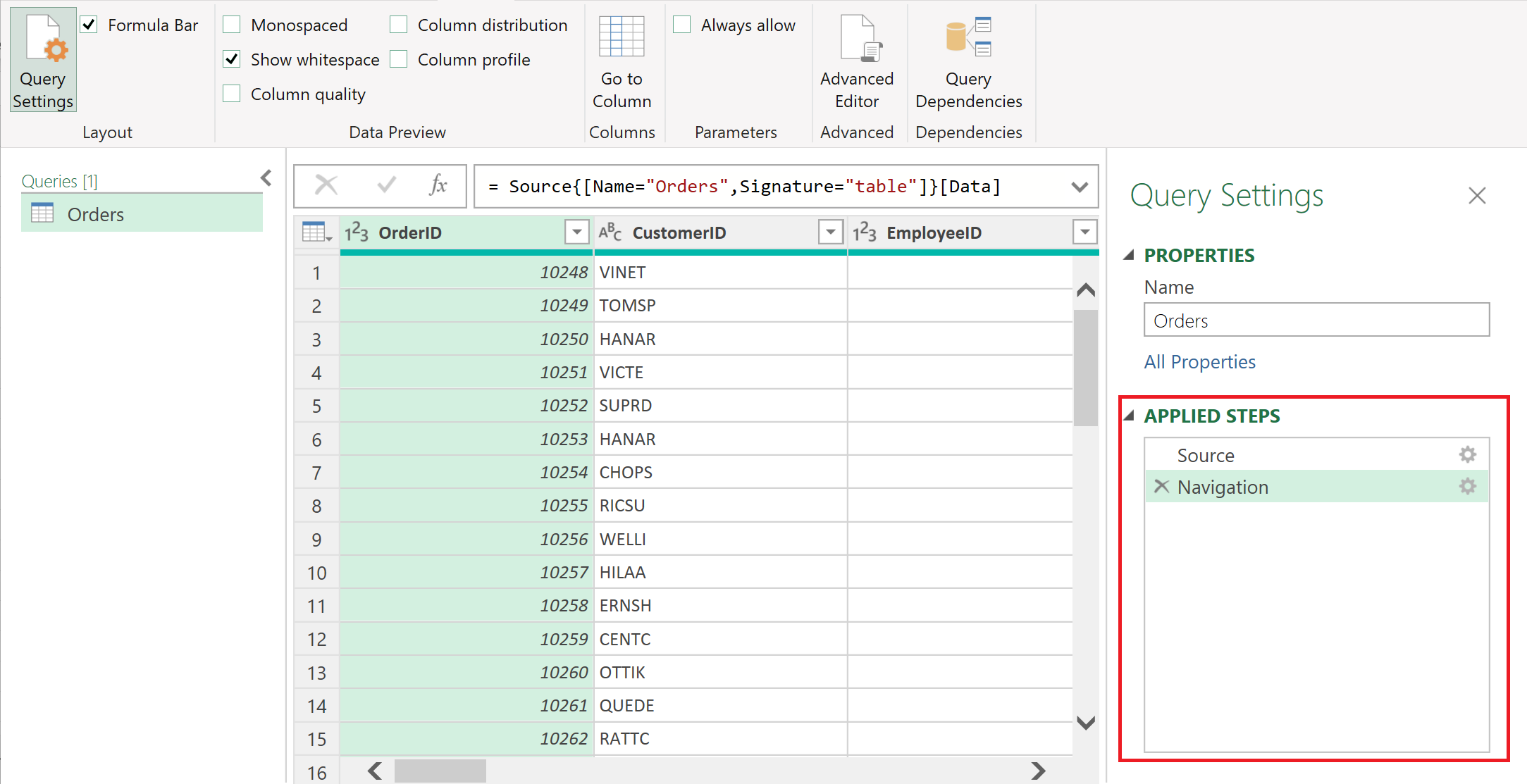
    Power Query works on a step-based transformation model, meaning every action you perform is recorded and can be replayed on new data with a single refresh.

    Power Query is part of Excel versions starting from Excel 2016 and Microsoft 365, developed by Microsoft to handle growing data complexity.


    Why Automate Data Cleaning Instead of Manual Excel Cleaning?

    Manual cleaning becomes inefficient as data volume increases. Power Query solves common Excel problems that formulas alone cannot handle efficiently.

    Manual Data CleaningPower Query Automation
    Needs repeated effortOne-time setup
    High risk of human errorRule-based and consistent
    Slow for large filesOptimized for big data
    Difficult to auditTransparent step history

    Fact: Professionals using Power Query report 60–80% reduction in data preparation time, especially when working with recurring reports.


    Types of Data Problems Power Query Can Fix Automatically

    Power Query is designed specifically to address messy and unstructured data. Below are the most common issues it can automate.

    1. Removing Extra Spaces and Non-Printable Characters

    Data imported from accounting software or web portals often contains hidden spaces that break formulas. Power Query can clean these instantly.

    2. Standardizing Text Case

    Customer names, vendor names, and item descriptions often appear in mixed cases. Power Query can convert all text to upper, lower, or proper case consistently.

    3. Splitting and Merging Columns

    Invoices and bank statements frequently combine multiple values in one column. Power Query can split data using delimiters or positions.

    4. Removing Duplicates Automatically

    Duplicate entries in ledgers and transaction data are common. Power Query removes duplicates based on defined columns without manual checks.

    5. Handling Missing or Blank Values

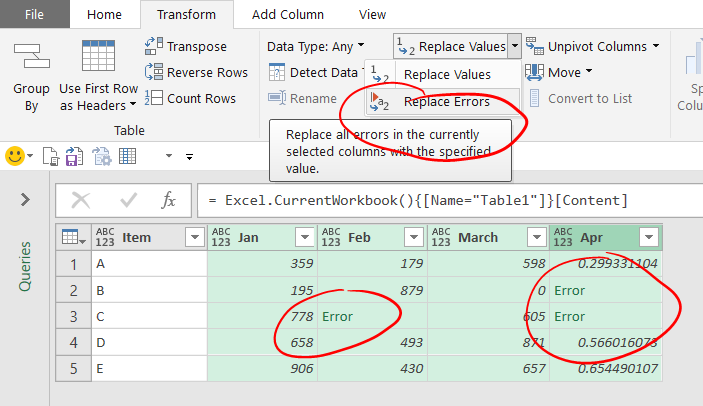
    Power Query can replace blanks with zero, text, or previous values using fill logic.


    How Power Query Automation Works

    Power Query follows a structured transformation process:

    1. Import raw data
    2. Apply cleaning and transformation steps
    3. Load cleaned data into Excel
    4. Refresh when source data changes

    Once created, the same steps apply every time new data is added.


    Step-by-Step: Automate Data Cleaning in Excel Using Power Query
    https://learn.microsoft.com/en-us/power-query/media/applied-steps/applied-steps-query-settings.png
    https://accessanalytic.com.au/wp-content/uploads/2018/06/Replace-Errors-1.png
    https://learn.microsoft.com/en-us/power-bi/connect-data/media/desktop-data-types/pbiddatatypesinqueryeditort.png

    4

    Step 1: Load Data into Power Query

    Use “Get Data” to import files such as Excel, CSV, text, or folders containing monthly data files.

    Step 2: Remove Unnecessary Rows and Columns

    Delete empty rows, summary rows, or unwanted columns to reduce file size and processing time.

    Step 3: Clean and Transform Data

    Apply transformations such as:

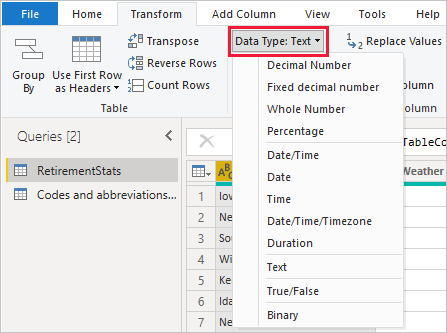
    • Trim and clean text
    • Change data types (text, number, date)
    • Replace values
    • Split columns

    Each action is recorded as a step.

    Step 4: Standardize Formats

    Ensure dates, currency, and numeric fields follow a uniform structure to avoid reporting errors.

    Step 5: Load Clean Data

    Load the final cleaned dataset into Excel tables or directly into reports.


    Power Query vs Excel Formulas for Data Cleaning

    | Feature | Excel Formulas | Power Query |
    |—|—|
    | Learning Curve | Low | Moderate |
    | Automation Level | Limited | High |
    | Large Data Handling | Slow | Efficient |
    | Repeatability | Manual | One-click refresh |

    Power Query is not a replacement for formulas, but a complementary tool focused on data preparation rather than analysis.


    Real-World Use Cases of Power Query Automation

    GST Return Preparation

    • Clean sales registers
    • Standardize invoice formats
    • Remove invalid GSTIN entries

    Bank Reconciliation

    • Import monthly bank statements
    • Normalize debit/credit columns
    • Match transactions automatically

    Payroll Processing

    • Merge attendance data
    • Standardize employee IDs
    • Prepare salary input sheets

    MIS Reporting

    • Combine multiple monthly files
    • Create clean master datasets
    • Feed dashboards without manual edits

    Best Practices for Power Query Automation

    • Always set correct data types early
    • Keep transformation steps minimal and logical
    • Name queries clearly for audit clarity
    • Avoid unnecessary calculated columns
    • Use folder-based imports for recurring data

    Figure Insight: A well-designed Power Query workflow can process 100,000+ rows in seconds, depending on system configuration.


    Common Mistakes to Avoid While Using Power Query

    • Ignoring data type mismatches
    • Loading unnecessary columns
    • Creating separate queries for similar tasks
    • Overusing custom columns when built-in transformations exist

    Avoiding these mistakes ensures stable and scalable automation.


    Is Power Query Suitable for Non-Technical Users?

    Yes. Power Query is no-code or low-code, making it accessible to accountants and MIS users with basic Excel knowledge. Most transformations are done through menus, not formulas.


    Future Scope of Power Query in Excel Automation

    Power Query is increasingly becoming the foundation for:

    • Automated MIS systems
    • Business intelligence reporting
    • Data pipelines feeding dashboards

    As data volumes grow, Power Query skills are becoming essential for finance and accounting professionals.


    Conclusion: Why You Should Automate Data Cleaning in Excel Using Power Query
    Automating data cleaning in Excel using Power Query is no longer optional for professionals dealing with repetitive data tasks. It ensures accuracy, consistency, scalability, and massive time savings. Once implemented, it transforms Excel from a manual tool into an automated data engine.

    For accountants, analysts, and business users, Power Query represents a long-term productivity investment that pays back every single month.


    Frequently Asked Questions (FAQ)

    1. What is the main advantage of using Power Query for data cleaning?

    Power Query allows one-time cleaning rules that refresh automatically, saving time and reducing errors.

    2. Can Power Query handle large datasets?

    Yes, it efficiently handles tens of thousands of rows better than traditional Excel formulas.

    3. Is Power Query available in all Excel versions?

    Power Query is built-in from Excel 2016 onward and in Microsoft 365 versions.

    4. Do Power Query changes affect original data?

    No, Power Query works on a copy of the data and never modifies the source file.

    5. Is coding required to use Power Query?

    No coding is required for most tasks; transformations are menu-driven.

    6. Can Power Query be refreshed automatically?

    Yes, queries can be refreshed manually or set to refresh when files are updated.

    7. Is Power Query useful for GST and accounting data?

    Yes, it is highly effective for GST returns, sales registers, and reconciliation work.


    Disclaimer

    This article is intended for educational and informational purposes only. Features, performance, and availability of Excel tools may vary depending on version and system configuration. Readers should evaluate suitability based on their specific business and operational requirements.


  • Excel Power Query: Combine and Clean Data Easily for Smarter Analysis in 2025

    Data is the lifeblood of every modern business, and Excel remains the most widely used tool for managing it. But anyone who works with data knows how messy, inconsistent, and fragmented it can get. Whether you’re merging multiple files, removing duplicates, or fixing formatting errors, manual cleaning can take hours—or even days.

    That’s where Excel Power Query comes in. Introduced as an advanced feature in Microsoft Excel, Power Query has transformed how professionals handle data. It enables users to connect, clean, combine, and transform data automatically without complex formulas or VBA code. In 2025, Power Query is more powerful than ever, helping millions of users worldwide save time and minimize human errors.

    According to Microsoft, businesses that use Power Query report up to 70% faster data preparation and 90% fewer manual data entry errors. In this article, we’ll explore what Power Query is, its key benefits, practical use cases, and how you can leverage it to combine and clean your data efficiently.


    What is Excel Power Query?

    Power Query is an Extract, Transform, and Load (ETL) tool built into Excel. It allows users to extract data from multiple sources, transform it into a clean format, and load it into Excel for analysis.

    You can find it under the Data tab → Get & Transform Data section in Excel. Unlike traditional Excel formulas, Power Query performs step-based automation, meaning you can record and repeat cleaning steps automatically without manual repetition.

    ProcessFunction
    ExtractPull data from multiple files, databases, or web sources
    TransformClean, filter, merge, and reshape the data
    LoadSend the cleaned data into Excel sheets or data models

    Why Power Query is Essential in 2025

    The explosion of data sources—cloud drives, CRMs, accounting systems, and APIs—makes it essential to use a tool that can handle multiple formats efficiently.

    Here are a few reasons why Power Query has become a must-have tool in 2025:

    1. Automation of repetitive tasks: Once a query is created, it can be refreshed automatically with updated data.
    2. Combines data from unlimited files: Ideal for merging multiple Excel or CSV files without manual copy-paste.
    3. No coding required: Everything works through an intuitive point-and-click interface.
    4. Improved accuracy: Consistent transformation rules reduce the risk of manual errors.
    5. Compatibility: Works with Excel, Power BI, SQL Server, and even web-based data.

    Combining Data with Power Query

    One of Power Query’s most powerful features is its ability to combine data from multiple files or tables easily.

    Example Scenario:

    Suppose you receive monthly sales reports from 12 regions, each stored in separate Excel files. Manually combining them could take hours. Power Query automates this entire process in minutes.

    Step-by-Step Process:

    1. Load files into Power Query:
      • Go to Data → Get Data → From Folder.
      • Select the folder containing all regional sales files.
    2. Combine and transform:
      • Power Query automatically detects similar column headers and merges them.
      • You can clean column names, change data types, and remove unwanted columns.
    3. Load to Excel:
      • Once transformed, click Close & Load to bring the combined dataset into Excel.
    StepTask Description
    1Import all files from a single folder
    2Combine data automatically using column headers
    3Apply cleaning transformations
    4Load data into Excel or Power BI

    This process can combine hundreds of files instantly, and when new data is added to the folder, you simply hit Refresh—the combined dataset updates automatically.


    Cleaning Data with Power Query

    Cleaning data is one of the most time-consuming parts of Excel work. Power Query simplifies it by providing built-in transformations like removing blanks, trimming spaces, fixing cases, and splitting columns.

    Common Data Cleaning Operations:

    1. Remove duplicates:
      Instantly delete duplicate entries with a single click.
    2. Split columns:
      Break a full name into first and last name using the Split Column by Delimiter option.
    3. Trim and clean:
      Remove extra spaces, non-printable characters, and inconsistent capitalization.
    4. Replace values:
      Find and replace incorrect spellings or missing entries automatically.
    5. Change data type:
      Convert text to numbers, dates, or other correct formats.
    6. Merge columns:
      Combine address fields or product names without formulas.

    Fact:
    A 2025 Microsoft report found that using Power Query to clean raw data reduces manual cleaning time by up to 80%, especially in large datasets above 100,000 rows.

    TaskPower Query Action
    Remove DuplicatesUse “Remove Duplicates” option under Home tab
    Standardize CaseUse “Format → Capitalize Each Word”
    Handle Null ValuesReplace or remove missing records automatically

    Advanced Power Query Techniques

    Power Query offers more than basic cleaning—it includes advanced features for professionals who want full control over data transformation.

    1. Append Queries

    Used to stack data from multiple tables with similar structures (like combining regional reports).

    2. Merge Queries

    Used to join data based on a common column, similar to VLOOKUP but far more efficient.

    3. Conditional Columns

    Add logic-based transformations (e.g., assign “High” or “Low” category based on sales values).

    4. Group By Function

    Summarize large datasets—calculate totals, averages, or counts directly inside Power Query.

    5. Custom Columns

    Create calculated fields using the M language for advanced users who want deeper customization.

    Interesting Stat:
    In corporate environments, Power Query has reduced the time to produce weekly MIS reports by up to 65%, freeing up teams to focus on strategic tasks.


    Practical Example: Cleaning and Combining Employee Data

    Imagine your HR department maintains employee records in separate Excel files from different branches. Each file has inconsistent column names, missing data, and spelling variations. Power Query can standardize this data effortlessly.

    StepDescription
    1Import all files from the HR folder
    2Rename columns (e.g., “Emp Name” to “Employee Name”)
    3Remove duplicates and blanks
    4Replace spelling errors in department names
    5Append all tables into one master file
    6Load the final dataset into Excel for analysis

    After applying Power Query, your HR master sheet becomes uniform, clean, and ready for analysis—reducing manual work from hours to minutes.


    Power Query vs Traditional Excel Methods

    | Feature | Power Query | Traditional Excel |
    |———-|————–|
    | Combining Files | Automated | Manual copy-paste |
    | Removing Duplicates | One-click | Requires formulas or filters |
    | Refreshing Data | Auto-refresh | Manual update |
    | Handling Large Data | High performance | Slows with large files |
    | Reusability | Fully repeatable | Must redo steps manually |

    Power Query not only saves time but also adds repeatability and consistency—something traditional Excel formulas can’t achieve easily.


    Power Query and AI Integration in 2025

    In 2025, Microsoft has introduced AI-enhanced Power Query, which detects data inconsistencies automatically. It suggests transformations based on context, such as recognizing postal codes, dates, or duplicate entries.

    For example, Power Query can now:

    • Suggest combining columns based on content patterns.
    • Detect outliers using AI-powered anomaly detection.
    • Predict missing values intelligently.

    This integration has made Power Query a core automation component in Excel and Power BI, bridging the gap between raw data and analysis-ready models.


    Conclusion

    Excel Power Query has evolved into one of the most indispensable tools for data professionals in 2025. It helps users combine, clean, and automate data preparation with remarkable ease—without writing a single line of code.

    Whether you manage financial data, HR records, or sales reports, Power Query will streamline your workflow, save hours of manual effort, and ensure consistent accuracy. By mastering it, you elevate Excel from a simple spreadsheet program to a complete data automation system.


    Disclaimer

    This article is for educational purposes only. The information shared here reflects general practices and trends as of 2025. Users should explore Power Query features according to their Excel version and business requirements.