Tag: GST Rate Rationalisation 2025

  • ITC Reversal Under GST: Complete Guide to 22 September 2025 Changes

    Introduction – What’s Changing from 22 September 2025

    The Goods and Services Tax (GST) framework in India is undergoing a major compliance change. From 22 September 2025, businesses supplying goods that become exempt must reverse the Input Tax Credit (ITC) they previously claimed on unsold stock.
    This rule, known as the ITC reversal under GST, is designed to maintain tax fairness. If a product turns exempt, the ITC benefit cannot continue. This article explains the rule in depth, provides real-world examples, pros & cons, FAQs, and practical steps to comply.


    What Is ITC Reversal Under GST?

    Input Tax Credit allows businesses to offset taxes paid on purchases against taxes collected on sales. However, if goods become exempt, the ITC taken earlier must be returned to the government.

    Key Points:

    • Applies only when goods/services shift from taxable to exempt.
    • No reversal needed if the goods remain taxable (even if GST rate reduces).
    • Covers both inputs (raw materials) and capital goods used in exempt supplies.

    Why the 22 September 2025 Deadline Matters

    From 22 September 2025, the government’s new GST rate rationalisation takes effect. Any unsold stock as on 21 September 2025 for goods becoming exempt will require ITC reversal.
    Businesses must audit their inventory and compute ITC before this date to avoid penalties.


    When Do You Need to Reverse ITC?

    ScenarioBefore 22 Sept 2025On/After 22 Sept 2025ITC Reversal?
    Product remains taxable but rate changesITC can be claimed as usualContinue to claim ITCNo
    Product becomes exempt supplyITC claimed normallyMust reverse ITC on unsold stockYes
    Capital goods used in exempt supplyProportionate ITC claimedPro rata reversal of remaining useful life ITCYes

    Real-Life Example of ITC Reversal

    Suppose a retailer stocks 1,000 units of a taxable product on 21 September 2025. From 22 September, the product becomes exempt.

    • 700 units sold before 22 Sept → No reversal
    • 300 units unsold as on 21 Sept → ITC must be reversed for those 300 units

    This simple scenario shows why accurate inventory tracking is essential.


    Steps to Comply with ITC Reversal Rules

    1. Conduct Inventory Audit
      Identify goods likely to become exempt and quantify stock as on 21 Sept 2025.
    2. Calculate ITC Claimed
      For unsold stock, compute the ITC you had availed when the goods were taxable.
    3. Reverse ITC in Returns
      Make the reversal entry in your GST returns and adjust the electronic credit ledger.
    4. Handle Capital Goods Separately
      Use the pro rata method for reversal based on the remaining useful life.
    5. Plan Cash Flow
      Since reversal may reduce credit available, prepare to pay output GST in cash if needed.

    Pro Rata Calculation for Capital Goods

    If a machine used to produce a soon-to-be-exempt product has a notional useful life of 60 months and you’ve used it for 20 months, then ITC reversal applies to the remaining 40 months proportionally.


    Pros and Cons of the New ITC Reversal Rule

    Pros:

    • Maintains fairness in GST credit utilisation.
    • Clarity for taxpayers on exempt vs taxable supplies.
    • Encourages accurate inventory and compliance practices.

    Cons:

    • Cash flow burden for businesses with large unsold inventories.
    • Increased accounting and compliance workload.
    • Need for proactive planning to avoid penalties.

    FAQs on ITC Reversal (Effective 22 September 2025)

    Q1: Do I need to reverse ITC if GST rate drops but product stays taxable?
    No, reversal applies only when goods become exempt, not when rates change.

    Q2: What’s the cutoff date for unsold stock?
    21 September 2025. Any unsold inventory of goods turning exempt after this date triggers reversal.

    Q3: How do I reverse ITC in my GST return?
    You must reduce your ITC claim in the electronic credit ledger and report it in your return for September 2025.

    Q4: Is there any grace period?
    No. The reversal applies from 22 September 2025 as per notification.

    Q5: Does this affect services as well as goods?
    Yes, if a taxable service becomes exempt, ITC reversal rules apply similarly.


    Checklist for Businesses Before 22 September 2025

    • Review GST rate changes for your products.
    • Segregate inventory becoming exempt vs remaining taxable.
    • Compute ITC on unsold stock.
    • Make reversal entries before filing September return.
    • Consult your tax advisor for complex cases.

    Conclusion – Be Ready for ITC Reversal on 22 September 2025

    The ITC reversal under GST effective 22 September 2025 is a critical compliance event. Businesses dealing in goods or services becoming exempt must reverse input tax credit on unsold stock to avoid penalties. Those whose products remain taxable are unaffected.

    Call-to-Action: Start your inventory and ITC review today. Speak to your GST consultant to ensure your business is compliant and cash-flow ready before the 22 September deadline.


    Disclaimer

    This article is for informational purposes only and does not constitute legal or tax advice. Readers should consult a qualified tax professional or GST consultant to understand how these rules apply to their specific situation.
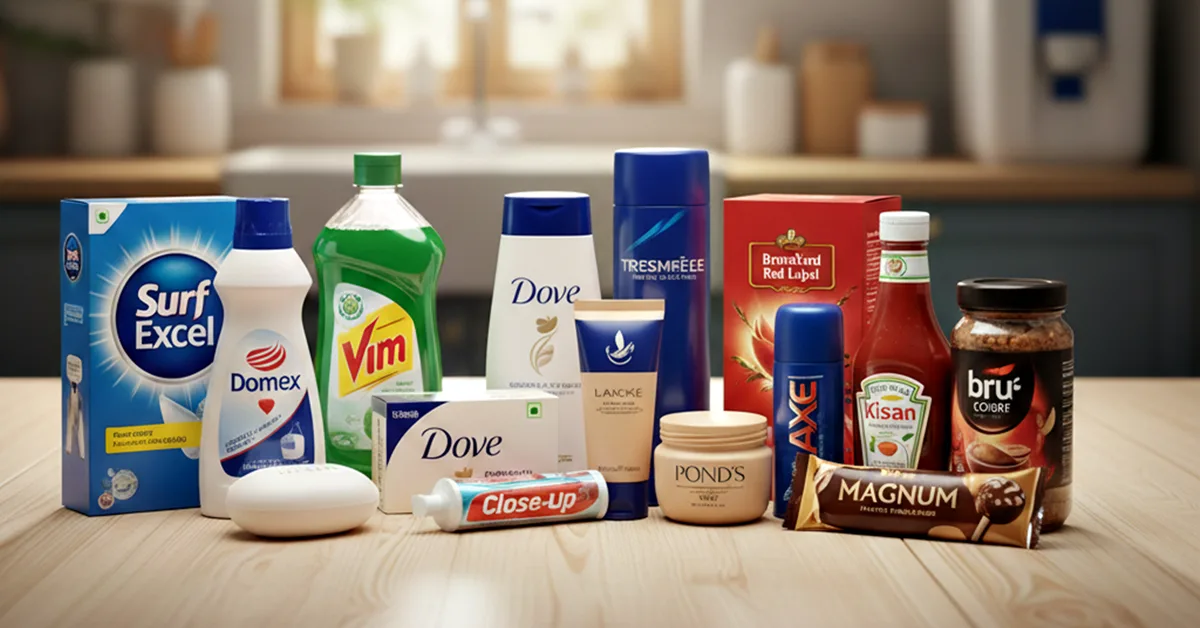

  • GST Cut 2025: HUL Slashes MRPs on Dove, Horlicks, Lux & More — Full Price List & Savings

    GST Cut 2025: HUL Slashes MRPs on Dove, Horlicks, Lux & More — Full Price List & Savings

    After the GST Council’s recent rationalisation (many everyday items moved from higher slabs to 5%), Hindustan Unilever announced a wide-ranging MRP revision effective 22 September 2025 and published revised retail prices for dozens of popular SKUs. Below is a clear, SEO-friendly, long-form breakdown you can use as a blog post: full product table (popular SKUs announced so far), category summaries, analysis of how the cuts affect value / premium positioning, and 5 FAQs.


    What happened

    The GST Council’s rate rationalisation – shifting many everyday personal-care and packaged-food items to a lower slab – prompted FMCG companies to update MRPs across large parts of their portfolios. Hindustan Unilever (HUL) revised retail prices on a number of its flagship SKUs (effective 22 September 2025) to pass on the GST benefit to consumers. This move covers personal-care staples, soaps, nutrition and packaged food and drinks.


    📊 Full HUL SKU Price Table (old MRP → new MRP, ₹ savings and %)

    CategoryProduct (Pack)Old MRP (₹)New MRP (₹)You Save (₹)You Save (%)
    Personal Care – PremiumDove Shampoo – 340 ml4904355511.22%
    Personal Care – MidDove Shampoo – 180 ml1651452012.12%
    Soap – BeautyLux Soap – 100 g3530514.29%
    Soap – Hygiene (Mass)Lifebuoy – 125 g3328515.15%
    Soap – MultipackLifebuoy 75 g × 4 Pack6860811.76%
    Nutrition – PremiumHorlicks – 1 kg3903504010.26%
    Nutrition – Small JarHorlicks – 200 g1301102015.38%
    Packaged FoodKissan Jam – 200 g90801011.11%
    Beverages (Instant Coffee)Bru Coffee – 100 g1801602011.11%

    (Percent saving = (Old – New) ÷ Old × 100.)


    Category summary — total impact at a glance

    • Soaps & personal-care: Consistent double-digit percentage reductions (≈11–15%). Mass soaps (Lifebuoy) and beauty soaps (Lux) both show healthy percent reductions; absolute rupee savings are small for low-priced bars (₹5–₹8), but percentage impact is meaningful for consumers on tight budgets.
    • Shampoos (premium): Premium shampoos such as Dove show larger absolute rupee savings (₹20–₹55), and percent cuts (~11–12%) mirror other categories — a tangible drop in wallet pain for higher-ASP SKUs.
    • Nutrition & packaged foods: Horlicks, Kissan and other packaged food SKUs saw single-SKU savings of ₹10–₹40 (≈10–15%), which will be visible at checkout and may nudge incremental purchases.

    Visual: Savings by category (quick interpretation)

    • Average percent saving across published SKUs: ~12–13% (varies SKU to SKU).
    • Absolute rupee savings: Higher for premium items (e.g., Dove 340 ml ₹55; Horlicks 1 kg ₹40). For low-ticket staples the rupee fall is small (₹5–₹10) but still relevant in bulk shopping.

    Deep dive: Cheap (mass) vs Premium brands — who benefits more?

    1) Absolute savings vs percentage savings
    Premium SKUs (higher MRP) deliver bigger absolute ₹ savings even when percent cut is similar. Example: Dove 340 ml (₹55 saved) vs Lifebuoy single bar (₹5 saved). For consumers, this means premium buyers see larger one-time reductions on each unit purchased.

    2) Basket impact
    A family buying multiple low-ticket soaps, shampoos and staples each month will see compounded savings. For example, buying 10 bars of Lifebuoy at the new price saves ₹50 across the basket — comparable to one mid-size premium SKU saving. That means mass brands’ reductions can be equally meaningful in everyday household budgets.

    3) Brand positioning and marketing
    HUL’s public move to publish price cuts signals a consumer-facing positioning: pass-through of policy benefits rather than pocketing the GST advantage. This may help HUL protect premium brands’ volumes (premium buyers feel rewarded) while using mass brand price drops to support volume growth in value-sensitive segments.

    4) Competitive dynamics
    When major players pass on cuts, smaller rivals may need to follow to protect market share, especially on entry-price SKUs. Analysts expect the FMCG sector’s overall demand to get a short-to-medium-term boost as a result.


    Practical examples — how much a household could save (illustrative)

    • Household A (small family): weekly basket = 1 × Dove 340 ml, 4 × Lifebuoy soap (75g), 1 × 200g Horlicks
      • Savings = Dove ₹55 + (4 × Lifebuoy single bar saving) + Horlicks 200g ₹20 → ~₹80–₹100 per week depending on pack mix.
    • Household B (value shopper): buys soaps, jam and instant coffee in bulk — smaller absolute but consistent percent benefits which add up monthly to meaningful amounts.

    Compliance & practical notes (labelling, stock already in trade)

    Government agencies asked companies to monitor MRPs and ensure consumers receive benefits; firms are expected to publish revised MRPs via public notices/ads and make changes on packaging/inventory or display reduced MRPs at point of sale. Retailers must reflect new prices from the effective date; unsold old-priced stock may be labelled/stickered with revised MRPs.


    What this means for consumers, retailers & investors

    • Consumers: immediate relief — lower checkout bills, especially if shopping for frequently used SKUs.
    • Retailers: need to manage stock labeling, POS updates and communicate new MRPs to customers to avoid confusion. There may be small margin pressure for some SKUs if retailers don’t adjust margins/commissions.
    • Investors/analysts: generally view GST rationalisation as positive for FMCG demand and market expansion; many expect volume improvement over time even if near-term margins may shift.

    Readability checklist (for publication)

    • Use the table above near the top for scannability.
    • Add small thumbnail images of the listed SKUs (optional) with ALT text including the SKU name + “new price”.
    • Add a short consumer action box: “How to check MRP in store” (look at packaging, ask retailer, check shelf labels) and “What to do if retailer charges old MRP” (ask for updated bill / report to consumer helpline).

    FAQs

    Q1 — When do the new HUL prices take effect?
    A1 — HUL’s published revised MRPs are effective 22 September 2025 (the date companies were asked to implement GST-linked re-pricing).

    Q2 — Will all HUL products get cheaper?
    A2 — Not necessarily every single SKU: the announced cuts cover many everyday personal-care, soap, nutrition and packaged-food SKUs. The quantum varies by product and pack size. Expect other SKUs to be updated in waves as companies adjust packaging and POS labels.

    Q3 — How much will I save on premium vs mass products?
    A3 — Percent reductions are broadly in the same double-digit band (≈10–15%), but premium items yield larger absolute rupee savings (e.g., ~₹55 on a bigger Dove bottle) while mass staples yield smaller rupee savings but similar percentage relief. (See the SKU table above for examples.)

    Q4 — What if a shop still charges old price after Sept 22?
    A4 — Ask the retailer for the revised price/advertisement proof. If unresolved, you can report to local consumer-protection forums or the relevant state legal metrology/consumer helpline — but first confirm whether the retailer is selling old-label stock which may require relabelling or a stickered MRP.

    Q5 — Will other FMCG companies follow HUL?
    A5 — Many FMCG companies are already announcing or expected to announce similar pass-throughs to remain competitive and comply with regulatory guidance; the overall sector is expected to benefit from increased demand.