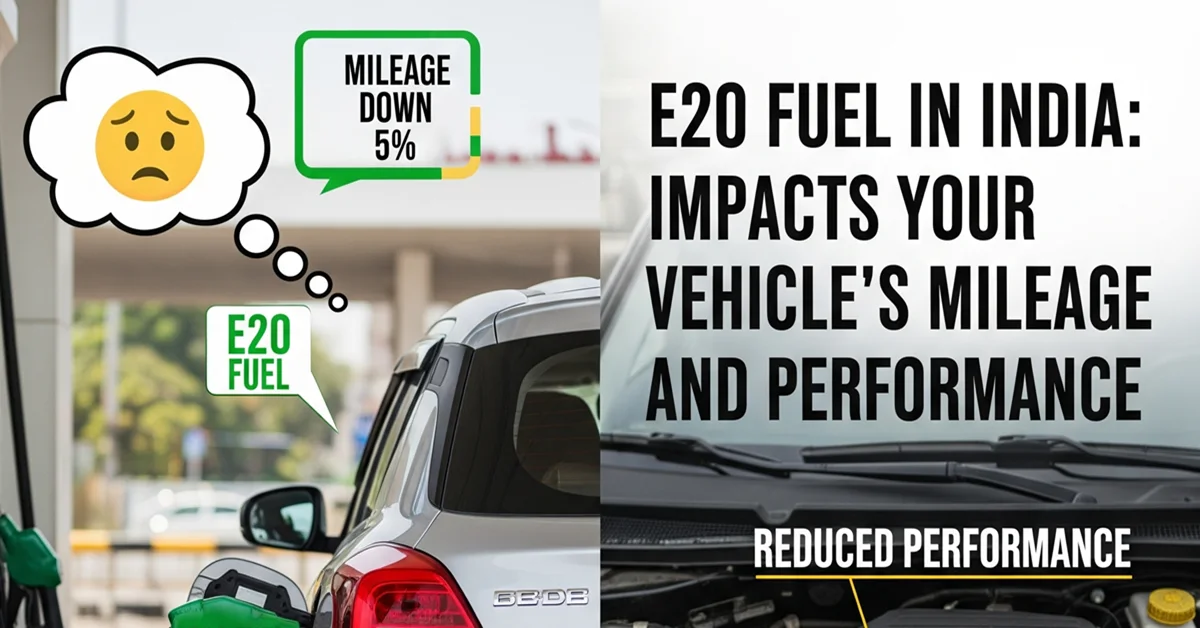
India’s push toward cleaner fuels has introduced ethanol-blended petrol, with E20 (20% ethanol, 80% petrol) now becoming widely available at fuel stations. While this initiative is aimed at reducing carbon emissions and promoting energy security, many owners of older carburetted vehicles are concerned about potential issues.
In this article, we dive deep into how ethanol-blended petrol affects carburetted vehicles, the advantages and challenges, and practical steps vehicle owners can take to minimize problems.
Understanding E20 Ethanol-Blended Petrol
E20 fuel is a petrol-ethanol blend where ethanol, a renewable biofuel, constitutes 20% of the fuel mix. Ethanol is produced from agricultural crops like sugarcane and maize, making it a cleaner, renewable alternative to conventional petrol.
Benefits of E20 fuel include:
- Reduced Carbon Emissions: Ethanol burns cleaner than petrol, helping reduce greenhouse gases.
- Energy Security: Using domestically produced ethanol reduces dependence on imported crude oil.
- Support for Agriculture: Increased demand for ethanol supports farmers and boosts the rural economy.
Why Carburetted Vehicles Are More Vulnerable
Carburetted vehicles, which include older two-wheelers and cars, rely on mechanical carburettors for fuel-air mixing. Unlike modern fuel-injected engines, carburettors can be more sensitive to changes in fuel composition. Using E20 fuel can lead to specific challenges:
| Issue | Cause | Impact on Vehicle |
|---|---|---|
| Sticky Deposits | Ethanol absorbs moisture, leading to residues in the carburettor | Can clog fuel lines and reduce engine performance |
| Reduced Fuel Efficiency | Ethanol has lower energy density than petrol | Owners may notice a 2–4% drop in mileage |
| Cold Start Difficulties | Higher vaporization temperature of ethanol | Harder engine start in cooler weather |
| Engine Wear | Solvent properties of ethanol may degrade rubber/plastic parts | Long-term wear of fuel system components |
| Acceleration Drop | Carburetted systems may not adapt well to ethanol | Slight reduction in power output during acceleration |
Practical Recommendations for Carburetted Vehicle Owners
Even with the challenges, carburetted vehicles can use E20 fuel safely if owners take precautions. Here’s how:
- Frequent Maintenance: Clean the carburettor periodically to prevent residue buildup.
- Monitor Mileage: Keep a log of fuel efficiency to spot unusual drops in performance.
- Use Fuel System Additives: Fuel additives can help prevent corrosion and maintain optimal engine performance.
- Check Rubber and Plastic Components: Inspect hoses, seals, and gaskets for ethanol-related degradation.
- Professional Consultation: Mechanics may recommend minor adjustments or modifications for better ethanol compatibility.
Government and Automaker Perspectives
The government has emphasized that E20 fuel is safe for all vehicles, including older carburetted ones. Studies show that, with proper maintenance, E20 does not cause significant engine damage.
Automakers, while supportive of ethanol adoption, acknowledge minor trade-offs:
- Slight decrease in fuel efficiency.
- Reduced acceleration in some older models.
- No voiding of vehicle insurance for using ethanol-blended petrol.
The overall consensus is that the benefits of cleaner fuel outweigh the minor inconveniences for most users.
Tips for Smooth Transition to E20 Fuel
- Start with Partial Blends: If your vehicle is older, begin with E10 fuel (10% ethanol) before moving to E20.
- Avoid Long Periods of Inactivity: Ethanol can absorb moisture; long idle periods may increase the risk of carburettor deposits.
- Refuel from Trusted Stations: Ensure that fuel is fresh and from reputed pumps to avoid contamination.
- Use Appropriate Lubricants: Some additives can counter ethanol’s solvent effect on engine components.
- Stay Informed: Keep an eye on updates from fuel authorities regarding new ethanol blends or vehicle guidelines.
Conclusion
Ethanol-blended petrol represents a positive step toward cleaner, sustainable fuel in India. While carburetted vehicles may face minor issues such as reduced mileage, sticky deposits, and occasional cold start difficulties, these can be managed with regular maintenance and careful monitoring. By understanding the implications of E20 fuel and taking proactive steps, vehicle owners can enjoy the environmental benefits without compromising their vehicle’s performance.
Switching to ethanol-blended petrol is ultimately a small adjustment with long-term advantages for both the environment and energy security. Carburetted vehicle owners, by staying vigilant and following maintenance practices, can safely embrace this change.
Disclaimer: The content of this article is for informational purposes only and is based on current knowledge and practices. Individual experiences may vary depending on vehicle type and condition. Readers should consult qualified automotive professionals for advice tailored to their specific vehicles.
- Tally Prime Practice Data: 100 Transactions With Answers for Accounting and GST PracticePractice Tally Prime with 100 real-world transactions and answers covering purchase, sales, GST, payments, receipts, journal entries, and adjustments.
- Excel Formulas Not Working? Common Errors and Fixes (Complete Guide for Beginners and Advanced Users)Excel formulas not working is one of the most common issues faced by users—from beginners to professionals. Whether you are working on financial models, MIS reports, dashboards, or data analysis,… Read more: Excel Formulas Not Working? Common Errors and Fixes (Complete Guide for Beginners and Advanced Users)
- Top 10 Excel Functions Every MIS Executive Must Know for Reporting, Automation and Data AnalysisIn today’s corporate environment, Top 10 Excel Functions Every MIS Executive Must Know is not just a topic—it is a core requirement for anyone working in reporting, data handling, and… Read more: Top 10 Excel Functions Every MIS Executive Must Know for Reporting, Automation and Data Analysis
- 100 Excel Formulas with Real-Life Examples (Office Use Cases for MIS, Accounting, HR & Data Analysis)In today’s data-driven workplace, mastering Excel formulas is no longer optional—it is a core skill. Whether you are working in MIS, accounting, HR, sales, or operations, Excel helps automate tasks,… Read more: 100 Excel Formulas with Real-Life Examples (Office Use Cases for MIS, Accounting, HR & Data Analysis)
- GST Reconciliation Process Using Excel (Complete Guide for Accurate GST Matching and Compliance)The GST reconciliation process using Excel is one of the most effective ways for businesses to ensure accuracy in tax reporting and avoid costly notices. With increasing scrutiny by GST… Read more: GST Reconciliation Process Using Excel (Complete Guide for Accurate GST Matching and Compliance)
- Top 10 GST Errors That Trigger Notices in India – Complete Guide to Avoid Penalties and Ensure ComplianceGST compliance is critical for every registered taxpayer in India. However, even small mistakes can result in serious consequences. In fact, Top 10 GST Errors That Trigger Notices is one… Read more: Top 10 GST Errors That Trigger Notices in India – Complete Guide to Avoid Penalties and Ensure Compliance
- How to Fix ITC Mismatch in GST Step-by-Step (GSTR-2B vs Books) – Complete Reconciliation Guide for Accurate ITC ClaimsInput Tax Credit (ITC) is one of the most critical components of GST compliance. However, many businesses face issues when there is a difference between GSTR-2B and books of accounts.… Read more: How to Fix ITC Mismatch in GST Step-by-Step (GSTR-2B vs Books) – Complete Reconciliation Guide for Accurate ITC Claims
- Why GSTR-1 and GSTR-3B Mismatch Happens (With Example) – Complete Guide for GST Compliance in IndiaMismatch between GSTR-1 and GSTR-3B is one of the most common compliance issues faced by GST taxpayers in India. If not handled properly, it can lead to notices, penalties, interest,… Read more: Why GSTR-1 and GSTR-3B Mismatch Happens (With Example) – Complete Guide for GST Compliance in India
- Tally Shortcut Keys List (50+ Keys for Faster Accounting) – Complete Practical Guide for Students & ProfessionalsIf you want to improve speed and accuracy in accounting, mastering the Tally Shortcut Keys List (50+ Keys for Faster Accounting) is essential. Most beginners rely heavily on the mouse,… Read more: Tally Shortcut Keys List (50+ Keys for Faster Accounting) – Complete Practical Guide for Students & Professionals
- How to Pass Complex Journal Entries in Tally (With GST Cases) – Advanced Step-by-Step Guide for Practical AccountingLearning how to pass complex journal entries in Tally (with GST cases) is essential for anyone who wants to move beyond basic accounting and handle real-world business transactions. While simple… Read more: How to Pass Complex Journal Entries in Tally (With GST Cases) – Advanced Step-by-Step Guide for Practical Accounting
- Top 10 Tally Mistakes Beginners Make and How to Avoid Them (Complete Practical Guide for Students & Professionals)If you are learning accounting, understanding the Top 10 Tally mistakes beginners make and how to avoid them is critical for building a strong foundation. Many students and even small… Read more: Top 10 Tally Mistakes Beginners Make and How to Avoid Them (Complete Practical Guide for Students & Professionals)
- 100 Journal Entries in Tally with Practical Examples (Advanced Guide for Students & Professionals)If you want to master accounting, understanding 100 journal entries in Tally with practical examples is one of the most powerful skills you can build. Journal entries are the first… Read more: 100 Journal Entries in Tally with Practical Examples (Advanced Guide for Students & Professionals)
- Top 10 GST Errors That Trigger Notices in India – Avoid Costly Penalties and Compliance RisksIf you are running a business in India, understanding the Top 10 GST Errors That Trigger Notices is critical for staying compliant and avoiding penalties. Many GST notices are not… Read more: Top 10 GST Errors That Trigger Notices in India – Avoid Costly Penalties and Compliance Risks
- Excel Automation Course Details – Learn VBA + Dashboards for High-Paying Data JobsIn today’s competitive job market, mastering Excel Automation Course VBA Dashboards skills can give you a powerful edge. Businesses rely heavily on Excel for reporting, analysis, and decision-making, but manual… Read more: Excel Automation Course Details – Learn VBA + Dashboards for High-Paying Data Jobs
- Best Budget Mic for Online Teaching in India (2026): Detailed Review of Voice Amplifiers for Teachers, Trainers, and CoachesChoosing the best budget mic for online teaching is essential for delivering clear audio, maintaining student engagement, and reducing vocal strain. Whether you teach online classes, conduct webinars, or manage… Read more: Best Budget Mic for Online Teaching in India (2026): Detailed Review of Voice Amplifiers for Teachers, Trainers, and Coaches