Tag: digital marketing 2025

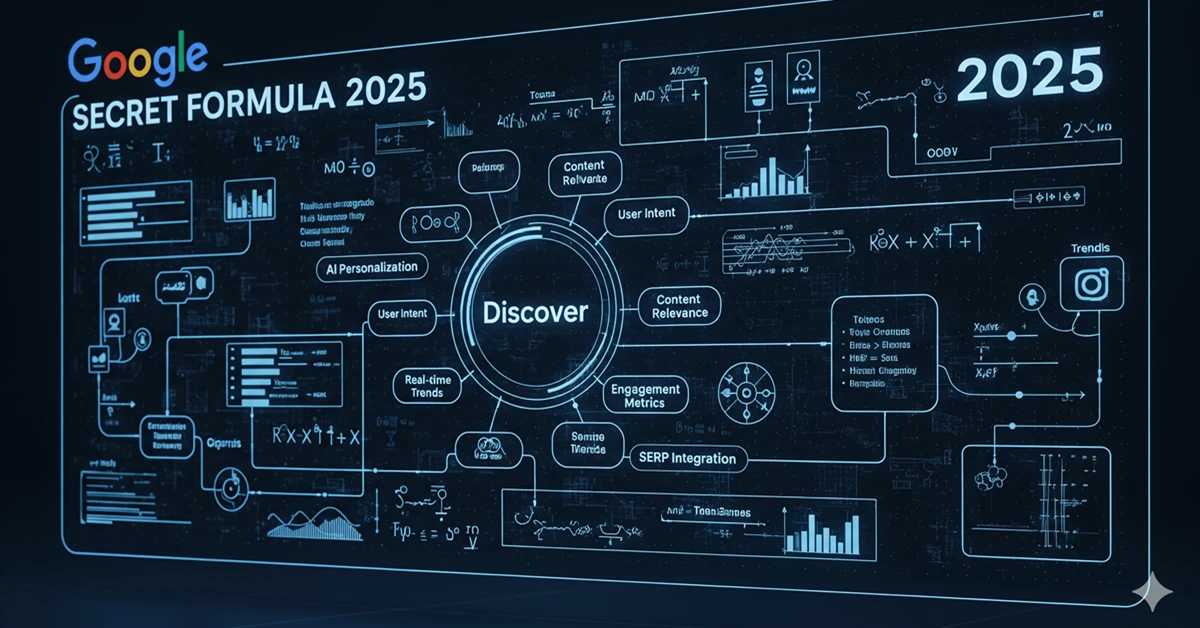
  • Google Discover Secret Formula 2025: How to Go from 0 to 1M Traffic

    Google Discover Secret Formula 2025: How to Go from 0 to 1M Traffic

    Google Discover has emerged as one of the most powerful traffic sources for content creators, bloggers, and digital marketers. Unlike traditional search traffic, Discover delivers your content directly to users based on their interests, search history, and engagement patterns.

    This guide explains the secret formula to scale your website traffic from 0 to 1 million visitors using Google Discover in 2025, along with actionable strategies and examples.


    📊 What is Google Discover?

    FeatureDescription
    Content FeedPersonalized feed on Google mobile app and homepage
    Audience TargetingBased on user interests, search behavior, and engagement
    Content TypeNews, articles, videos, blogs, evergreen content
    Traffic PotentialCan deliver high volume traffic without SEO keywords

    Key Insight: Google Discover traffic does not rely on traditional search queries but focuses on user intent and behavior, making it crucial to optimize for interest-based engagement.


    🔑 Secret Formula to Scale Traffic

    1. High-Quality Visual Content
      • Use high-resolution images for every article.
      • Recommended image dimensions: 1200 × 628 pixels (minimum width 1200px).
      • Images should be relevant, visually appealing, and properly compressed to ensure fast loading.
    2. Compelling Headlines
      • Headlines must be clear, intriguing, and benefit-driven.
      • Example: Instead of “SEO Tips,” use “10 Google Discover SEO Secrets to Boost Traffic 10x.”
    3. Fresh and Evergreen Content Mix
      • Combine newsworthy topics with evergreen content.
      • Google Discover rewards frequently updated, relevant content.
    4. Mobile-First Design
      • Most Discover traffic comes from mobile users.
      • Optimize page speed, responsive design, and AMP pages.
    5. Content Engagement Signals
      • High dwell time, scroll depth, and low bounce rates improve Discover visibility.
      • Encourage interactive content like polls, quizzes, and embedded videos.
    6. Topical Authority
      • Focus on a niche and publish consistently.
      • Example: Tech blogs posting daily updates on AI, gadgets, and tools gain authority and Discover traction.

    ⚡ Example of Traffic Growth

    MonthContent PublishedDiscover ImpressionsClicksTraffic Growth
    Jan 202510 articles50,0005,0000 → 5k
    Mar 202525 articles200,00020,0005k → 25k
    Jun 202550 articles500,00060,00025k → 85k
    Sep 202580 articles1,500,000150,00085k → 250k
    Dec 2025100+ articles5,000,0001,000,000250k → 1M+

    📌 Step-by-Step Guide to Implement

    1. Identify Trending Topics
      • Use Google Trends, Exploding Topics, or your niche analytics.
    2. Create High-Quality Content
      • Long-form articles, videos, and infographics with original research.
    3. Optimize Visuals and Metadata
      • Use high-quality images with 1200 × 628 px dimensions, ALT tags, structured data, and meta descriptions.
    4. Focus on Engagement
      • Add CTAs, interactive elements, and related content links to boost time on page.
    5. Analyze and Iterate
      • Use Google Search Console > Discover report to track impressions, clicks, and CTR.
      • Update underperforming posts to increase discoverability.

    ❗ Common Mistakes to Avoid

    • Publishing low-quality content just to meet word count.
    • Ignoring mobile optimization.
    • Using clickbait headlines without delivering value.
    • Failing to update content regularly.
    • Overlooking Google Discover guidelines for images and structured data.

    ✅ Conclusion

    Scaling from 0 to 1M traffic with Google Discover in 2025 is achievable with strategic content planning, visual optimization, and engagement-focused strategies.

    The secret formula lies in consistent publishing, high-quality visuals (minimum 1200 × 628 px), mobile optimization, and understanding your audience’s interests. By following this roadmap, bloggers and marketers can unlock massive organic traffic growth without relying solely on search engine queries.


  • Google AI Mode: How the Biggest Ad Change in 25 Years Will Transform Online Business

    For the first time in 25 years, Google is rewriting the rules of online advertising. With the integration of AI Mode into search, shopping, and buying experiences, this is not just another update — it’s a seismic shift in digital marketing.

    Businesses, marketers, and founders must adapt quickly to stay competitive. In this article, we break down what this change means, why it matters, and how to position your brand to win in the new AI-driven era.


    What’s Changing: Google Ads Meet AI Mode

    Google Ads will now be fully integrated into AI Mode, meaning traditional keyword targeting is evolving into conversation-based targeting. This shift changes how users interact with ads and how businesses target potential customers.

    Key Highlights:

    • End of Pure Keywords: Instead of targeting individual keywords, AI Mode focuses on user intent expressed in conversational queries.
    • Brand as Targeting Strategy: Your brand profile and online presence now act as the primary way Google’s AI determines who sees your ads.
    • Ads Become AI Training: Every interaction with your ad helps train Google’s AI to improve targeting and engagement for your business.

    Conversation Targeting vs. Keyword Targeting

    AspectKeyword TargetingConversation Targeting (AI Mode)
    User InputSingle keywords or phrasesNatural language questions or dialogue
    Ad DeliveryBased on search keywordsBased on conversational context and intent
    TargetingNarrow and specificBroad, intent-driven, and personalized
    Example“best running shoes”“Which running shoes are best for flat feet?”

    Why It Matters:
    Users now interact with AI assistants conversationally. Ads that appear in these conversations need to align with the intent behind the question, not just the exact words used.


    Your Brand Is Your New Targeting Strategy

    In this new system, Google evaluates your brand profile — including your website, content, product listings, and reputation — to determine relevance in AI-driven conversations.

    • Strong brand presence = higher visibility in AI interactions
    • Clear messaging = better alignment with user intent
    • Consistent product/service descriptions = AI accurately matches queries to your offerings

    Google Ads Accounts as AI Training Systems

    Every interaction with your ads feeds Google’s AI, making your account a learning system for your business. This creates a feedback loop:

    1. User interacts with AI and sees your ad
    2. AI observes engagement, clicks, and conversions
    3. System refines targeting to improve relevance
    4. Your ads become increasingly effective over time

    Implication: Even small tweaks in your campaigns or brand assets can have amplified effects on performance as AI learns.


    Will Users Click Ads in AI Conversations?

    This is the million-dollar question. While users rely on AI for guidance, the ultimate success of AI ads depends on:

    • How seamlessly the ad integrates into the conversation
    • Trust and relevance of your brand
    • Clear value proposition within AI’s responses

    Businesses that adapt early and optimize for AI-driven interactions are likely to capture a disproportionate share of traffic and conversions.


    Steps to Prepare Your Business

    1. Audit Your Brand Assets: Ensure product listings, website, and content clearly communicate your offerings.
    2. Optimize Messaging: Focus on intent-based language, answering common questions and solving user problems.
    3. Integrate AI-Friendly Campaigns: Adjust Google Ads campaigns to align with conversational queries, not just keywords.
    4. Monitor AI Interactions: Track which queries lead to engagement and refine your content & ads accordingly.
    5. Train Your Team Early: Familiarize your marketing team with AI conversation dynamics and insights.

    Conclusion

    Google’s AI Mode represents the biggest shift in online advertising in 25 years. The death of keywords, rise of conversation targeting, and the transformation of ads into AI-trained systems mean businesses must act fast.

    By optimizing your brand, preparing your ads for conversational search, and leveraging AI-driven insights, you can position your business for a dominant advantage in the new AI era.


    FAQs

    Q1. What is Google AI Mode in ads?
    A: It’s an integration of AI into Google Ads that allows ad targeting based on user conversation and intent rather than just keywords.

    Q2. How does conversation targeting differ from keyword targeting?
    A: Instead of matching exact search terms, AI looks at the context of a user’s question or dialogue to show relevant ads.

    Q3. Why is my brand now my targeting strategy?
    A: Google’s AI uses your brand profile, content, and online presence to determine relevance in conversations, effectively making your brand the primary targeting mechanism.

    Q4. How do I make my Google Ads account an AI training system?
    A: Every ad interaction feeds AI with data on user engagement. By optimizing your campaigns and content, the AI learns what works best for your business over time.

    Q5. Will users click ads in AI conversations?
    A: It depends on ad relevance, integration into the conversation, trust, and the value proposition offered. Early adopters who optimize correctly are likely to see higher engagement.

    Q6. What steps should I take to prepare for this change?
    A: Audit your brand assets, optimize content for intent, integrate AI-friendly campaigns, monitor performance, and train your marketing team on AI dynamics.