Tag: ai and job loss

  • TCS Employee Footpath Incident: A Reminder to Upgrade, Not Eliminate

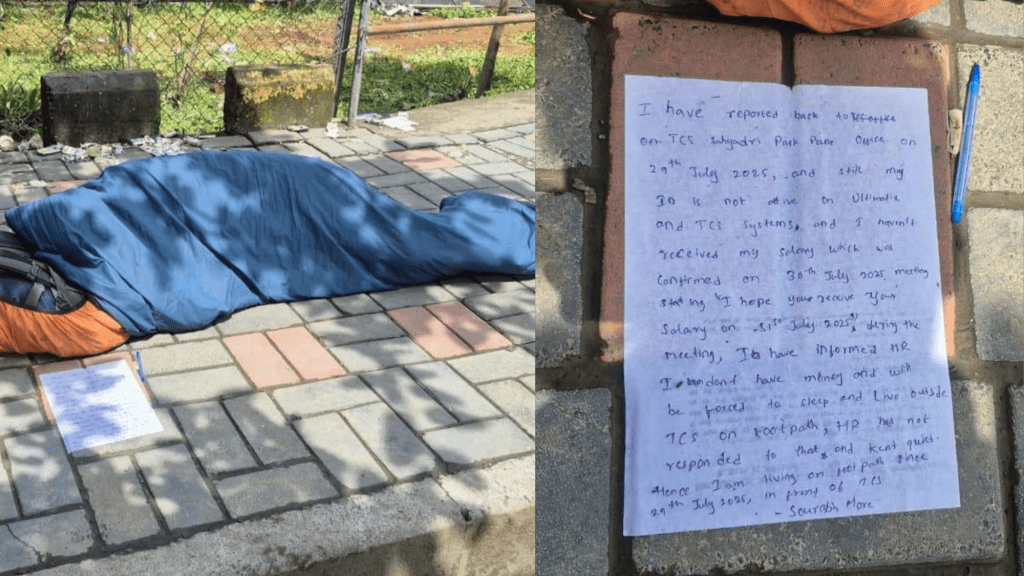
    The image of a TCS employee sleeping on the footpath outside the company’s Pune office has gone viral—not because it’s sensational, but because it’s symbolic. It represents a disturbing disconnect between corporate decisions and individual livelihoods.
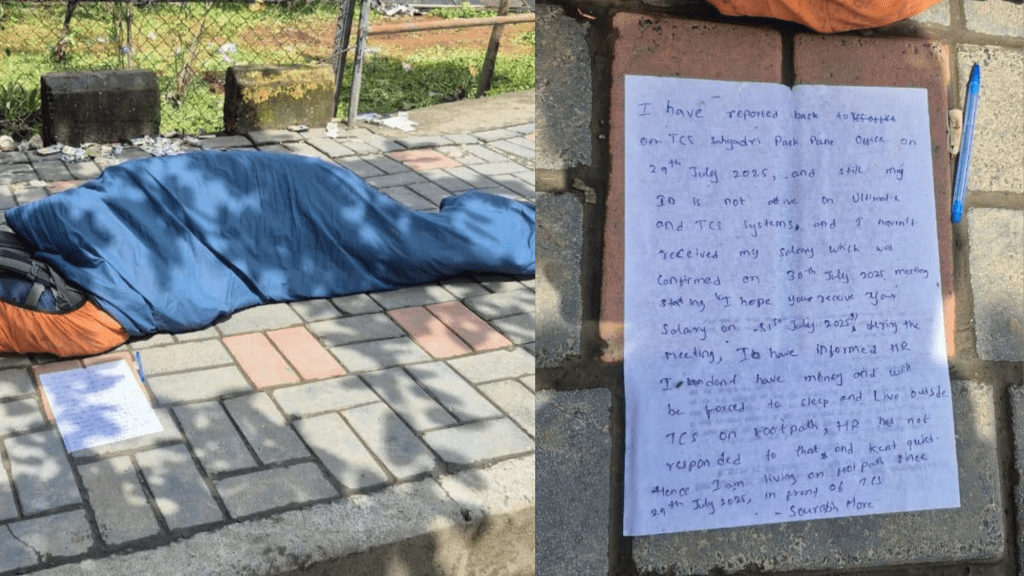
    This wasn’t just about delayed salary. It was about being locked out—of systems, of communication, and perhaps even of hope. And while the specifics of the incident may vary, one thing is clear: mass layoffs and impersonal processes are failing the human side of technology.

    But what if there were another way?


    🚀 What If We Reskilled Instead of Released?

    In a rapidly changing tech world driven by AI, automation, and digital disruption, companies are understandably under pressure to stay competitive. But cutting jobs to reduce costs isn’t the only path.

    Instead of laying off, companies can re-invest in their existing employees. They already understand the culture, the expectations, the systems. Why not upgrade their skill sets to match evolving business needs?

    Imagine the TCS employee on the footpath—if, instead of being deactivated, he had been enrolled in an internal program to learn AI tools, automation frameworks, or low-code development, would he still be sleeping outside the very building he once contributed to?


    📉 Layoffs Are a Short-Term Fix with Long-Term Damage

    While layoffs may offer a short-term reduction in payroll cost, they come with hidden losses:

    • Morale dips among remaining employees
    • Loss of knowledge and continuity
    • Brand damage in the public eye
    • Re-hiring costs when new talent is eventually needed

    The human toll is even greater. It can take months or even years for laid-off workers to retrain, recover emotionally, and re-enter the workforce. In contrast, internal upskilling takes weeks or months, and the employee never leaves the system.


    📚 Upskilling: The Smarter Strategy

    Here’s what companies can do instead:

    1. 🔄 Internal Talent Mobility

    Create programs that allow employees to shift between roles after training, rather than facing termination.

    2. 🧠 AI and Automation Training

    Instead of replacing employees with AI, train them to work alongside AI—in tools like Power BI, Python, ChatGPT, Tableau, or cloud platforms like AWS and Azure.

    3. 📈 Continuous Learning Culture

    Build a structure where learning is not just encouraged but embedded into job roles.

    4. 🛡️ Skill Assurance Before Termination

    Before any role is declared redundant, offer a pathway to redeployment through reskilling—especially in large firms with vast internal project diversity.


    🏢 Real Leadership Prioritizes People

    The TCS employee footpath incident isn’t just a corporate HR issue—it’s a missed opportunity. An opportunity to treat employees not as replaceable resources, but as assets worth upgrading.

    In today’s world, skills are currency. And the best investment a company can make is not in severance—but in education.


    💬 Final Thought: Replace Pink Slips with Progress

    In a world changing faster than ever, human capital must evolve, not evaporate. Layoffs may be an easy answer on a spreadsheet, but in the long run, upskilling creates more value, loyalty, and sustainability.

    As AI grows, so must we.
    Let the footpath never again be the desk of a talented professional.


  • TCS Employee Footpath Protest Highlights Urgent Need for Corporate Empathy and Policy Reform

    In a deeply unsettling turn of events, a software professional was seen living on a footpath outside his company’s office, drawing national attention. The image of a TCS employee sleeping on the footpath with a hand-written note explaining his plight has become symbolic of a growing concern in India’s IT sector: the lack of support systems when employees are caught in procedural or transition-based conflicts.

    🚧 When Corporate Process Fails the Individual

    This wasn’t just about delayed salary or inactive ID access. It was about what happens when communication gaps, administrative delays, or unclear HR protocols leave an employee stranded—both literally and emotionally. Without income, housing, or access to internal systems, the employee reportedly decided to remain on the footpath in front of the very company he worked for, silently protesting what he believed was an unjust response to his situation.

    Such an act isn’t just a cry for help—it’s a mirror held up to an entire industry’s operational blind spots.

    💼 Corporate Structure vs Human Sensitivity

    In large IT firms, structured HR processes and compliance rules often guide responses to employee issues. But when these policies are applied without empathy or flexibility, the consequences can be devastating. Whether the situation stemmed from a miscommunication or a breach of contract, no employee should be left homeless outside the gates of their workplace. It highlights a gap not just in policy, but in compassion.

    This incident begs a simple question: Should administrative silence ever leave an employee sleeping on concrete for days?

    📉 Layoffs, AI, and the Shrinking Middle

    This situation also comes at a time when the Indian IT industry is seeing a rise in layoffs, salary freezes, and restructuring, often attributed to automation, project slowdowns, and evolving client demands. Employees, especially those in mid-level or non-core roles, find themselves increasingly vulnerable to being deactivated or replaced, often without clear transitional support.

    Unfortunately, in many such cases, companies either lack predefined exit frameworks or fail to communicate with clarity and timeliness, resulting in confusion and resentment.

    🧾 Companies Must Plan Before They Cut

    What we’re seeing today isn’t just about one employee on one footpath—it’s about a systemic lack of foresight in how companies handle benching, exits, and role transitions.

    Every enterprise, especially giants like TCS, must ensure that:

    • Clear communication is maintained with all employees—even inactive ones.
    • Transition assistance programs are in place before roles are cut.
    • Payroll status is not abruptly affected without proper due process.
    • Housing or emergency support options exist in extreme situations.

    Simply put, if a layoff or deactivation is inevitable, it must be done humanely and responsibly.

    📚 A Wake-Up Call: Reskill Before the World Moves On

    Behind this incident also lies a subtle truth: the industry is changing faster than ever before. Automation and artificial intelligence are beginning to replace repetitive and low-value tasks across domains. Those who are not actively upgrading their skills may find themselves without warning on the wrong side of that shift.

    This is why now, more than ever, professionals must embrace AI literacy, digital transformation, and continuous learning. Whether you’re a developer, analyst, support engineer, or project manager, staying updated isn’t optional—it’s survival.

    🌱 Final Thought

    The TCS employee footpath episode is not just a one-off event. It’s a signal flare for both employers and employees to pause, reflect, and prepare.

    • Companies must create humane, transparent offboarding and transition policies.
    • Employees must proactively upskill and embrace emerging technologies, especially AI and automation.

    After all, in an age where machines are learning faster than people, the best safety net is education—and empathy.