
Blog

  • EPFO’s Diwali Gift for Non-Government Employees: Minimum Pension Hike & Instant PF Withdrawals

    EPFO’s Diwali Gift for Non-Government Employees: Minimum Pension Hike & Instant PF Withdrawals

    The Employees’ Provident Fund Organisation (EPFO) is preparing a major festive-season reform for India’s workforce. If approved in the upcoming board meeting, millions of non-government employees could benefit from a higher minimum pension and a new instant PF withdrawal facility. Here’s a detailed look at what’s on the table, how it affects you, and why it matters.


    🔑 Highlights at a Glance

    FeatureCurrent ScenarioProposed ChangeLikely Impact
    Minimum EPS Pension₹1,000/month baseline for eligible pensionersHike to ₹1,500–₹2,500/month (under discussion)Higher monthly income for lowest-paid retirees
    PF Withdrawal ProcessClaims filed online/offline; payout time 3–10 working daysInstant withdrawals via ATM/UPI, part of EPFO 3.0Emergency access to funds; bank-like convenience

    📝 Detailed Explanation

    1️⃣ Minimum Pension Hike

    For years, trade unions and pensioner associations have demanded an increase in the EPS minimum pension. At present, the lowest slab stands at ₹1,000 per month, which has not kept pace with inflation. The EPFO board will examine a proposal to raise this to somewhere between ₹1,500 and ₹2,500 per month.

    This move would directly benefit the most vulnerable pensioners, giving them more disposable income and improving their quality of life. It also signals the government’s intent to strengthen social security for private-sector workers.

    2️⃣ Instant PF Withdrawal Facility (EPFO 3.0)

    Currently, even online EPF withdrawal requests can take several days to process. The proposed system aims to integrate EPFO accounts with ATM cards and UPI platforms, allowing subscribers to withdraw partial funds instantly. This would make the PF system operate more like a banking account, reducing stress during emergencies such as medical expenses or urgent family needs.

    3️⃣ Impact on Different Segments

    • Mass-market workers: immediate access to funds + a higher pension.
    • Mid-income employees: more flexibility without disturbing long-term savings significantly.
    • Retirees: a tangible pension increase to offset rising costs.

    📊 Category-Wise Impact Table

    Category of SubscriberKey Benefit from Proposed ReformPossible Concerns
    Existing EPS Pensioners at Minimum LevelHigher monthly pension (₹500–₹1,500 more per month)Budgetary strain if funding not defined
    Active EPF MembersQuicker access to PF money through ATM/UPIRisk of dipping into retirement corpus too often
    EmployersSmoother process for employees’ emergency needsNeed for communication & updated HR processes
    EPFO AdministrationModern image; reduced paperworkSecurity, fraud-prevention & IT costs

    ⚠️ Things to Watch

    • Final decision at the EPFO Board Meeting in October 2025.
    • Eligibility criteria for instant withdrawals (caps, conditions).
    • Whether the pension hike will be fully funded by EPFO or partly subsidised.
    • Data security and fraud protection for ATM/UPI withdrawals.

    💡 Why This Matters

    A stronger social-security net plus easier fund access can boost workforce morale and consumer spending. However, it must be balanced with preserving the retirement corpus and maintaining EPFO’s long-term sustainability.


    ❓ FAQs

    Q1. When will the higher minimum pension take effect?
    A: Only after the EPFO Board approves and issues a notification. The proposal will be discussed in the October 2025 meeting.

    Q2. How much will the minimum pension increase by?
    A: Proposals range from ₹1,500 to ₹2,500 per month, up from the current ₹1,000.

    Q3. Will instant PF withdrawals allow the full balance?
    A: No. Only partial withdrawals are expected to be allowed (exact caps yet to be announced).

    Q4. Do I need a new card or app for ATM/UPI withdrawals?
    A: Likely yes; EPFO may issue new credentials or integrate with your existing bank KYC to enable the facility.

    Q5. Will this affect my employer’s contribution?
    A: No change in contribution rates has been announced. The reform is about withdrawal convenience and pension amounts.


  • GST Cut 2025: HUL Slashes MRPs on Dove, Horlicks, Lux & More — Full Price List & Savings

    GST Cut 2025: HUL Slashes MRPs on Dove, Horlicks, Lux & More — Full Price List & Savings

    After the GST Council’s recent rationalisation (many everyday items moved from higher slabs to 5%), Hindustan Unilever announced a wide-ranging MRP revision effective 22 September 2025 and published revised retail prices for dozens of popular SKUs. Below is a clear, SEO-friendly, long-form breakdown you can use as a blog post: full product table (popular SKUs announced so far), category summaries, analysis of how the cuts affect value / premium positioning, and 5 FAQs.


    What happened

    The GST Council’s rate rationalisation – shifting many everyday personal-care and packaged-food items to a lower slab – prompted FMCG companies to update MRPs across large parts of their portfolios. Hindustan Unilever (HUL) revised retail prices on a number of its flagship SKUs (effective 22 September 2025) to pass on the GST benefit to consumers. This move covers personal-care staples, soaps, nutrition and packaged food and drinks.


    📊 Full HUL SKU Price Table (old MRP → new MRP, ₹ savings and %)

    CategoryProduct (Pack)Old MRP (₹)New MRP (₹)You Save (₹)You Save (%)
    Personal Care – PremiumDove Shampoo – 340 ml4904355511.22%
    Personal Care – MidDove Shampoo – 180 ml1651452012.12%
    Soap – BeautyLux Soap – 100 g3530514.29%
    Soap – Hygiene (Mass)Lifebuoy – 125 g3328515.15%
    Soap – MultipackLifebuoy 75 g × 4 Pack6860811.76%
    Nutrition – PremiumHorlicks – 1 kg3903504010.26%
    Nutrition – Small JarHorlicks – 200 g1301102015.38%
    Packaged FoodKissan Jam – 200 g90801011.11%
    Beverages (Instant Coffee)Bru Coffee – 100 g1801602011.11%

    (Percent saving = (Old – New) ÷ Old × 100.)


    Category summary — total impact at a glance

    • Soaps & personal-care: Consistent double-digit percentage reductions (≈11–15%). Mass soaps (Lifebuoy) and beauty soaps (Lux) both show healthy percent reductions; absolute rupee savings are small for low-priced bars (₹5–₹8), but percentage impact is meaningful for consumers on tight budgets.
    • Shampoos (premium): Premium shampoos such as Dove show larger absolute rupee savings (₹20–₹55), and percent cuts (~11–12%) mirror other categories — a tangible drop in wallet pain for higher-ASP SKUs.
    • Nutrition & packaged foods: Horlicks, Kissan and other packaged food SKUs saw single-SKU savings of ₹10–₹40 (≈10–15%), which will be visible at checkout and may nudge incremental purchases.

    Visual: Savings by category (quick interpretation)

    • Average percent saving across published SKUs: ~12–13% (varies SKU to SKU).
    • Absolute rupee savings: Higher for premium items (e.g., Dove 340 ml ₹55; Horlicks 1 kg ₹40). For low-ticket staples the rupee fall is small (₹5–₹10) but still relevant in bulk shopping.

    Deep dive: Cheap (mass) vs Premium brands — who benefits more?

    1) Absolute savings vs percentage savings
    Premium SKUs (higher MRP) deliver bigger absolute ₹ savings even when percent cut is similar. Example: Dove 340 ml (₹55 saved) vs Lifebuoy single bar (₹5 saved). For consumers, this means premium buyers see larger one-time reductions on each unit purchased.

    2) Basket impact
    A family buying multiple low-ticket soaps, shampoos and staples each month will see compounded savings. For example, buying 10 bars of Lifebuoy at the new price saves ₹50 across the basket — comparable to one mid-size premium SKU saving. That means mass brands’ reductions can be equally meaningful in everyday household budgets.

    3) Brand positioning and marketing
    HUL’s public move to publish price cuts signals a consumer-facing positioning: pass-through of policy benefits rather than pocketing the GST advantage. This may help HUL protect premium brands’ volumes (premium buyers feel rewarded) while using mass brand price drops to support volume growth in value-sensitive segments.

    4) Competitive dynamics
    When major players pass on cuts, smaller rivals may need to follow to protect market share, especially on entry-price SKUs. Analysts expect the FMCG sector’s overall demand to get a short-to-medium-term boost as a result.


    Practical examples — how much a household could save (illustrative)

    • Household A (small family): weekly basket = 1 × Dove 340 ml, 4 × Lifebuoy soap (75g), 1 × 200g Horlicks
      • Savings = Dove ₹55 + (4 × Lifebuoy single bar saving) + Horlicks 200g ₹20 → ~₹80–₹100 per week depending on pack mix.
    • Household B (value shopper): buys soaps, jam and instant coffee in bulk — smaller absolute but consistent percent benefits which add up monthly to meaningful amounts.

    Compliance & practical notes (labelling, stock already in trade)

    Government agencies asked companies to monitor MRPs and ensure consumers receive benefits; firms are expected to publish revised MRPs via public notices/ads and make changes on packaging/inventory or display reduced MRPs at point of sale. Retailers must reflect new prices from the effective date; unsold old-priced stock may be labelled/stickered with revised MRPs.


    What this means for consumers, retailers & investors

    • Consumers: immediate relief — lower checkout bills, especially if shopping for frequently used SKUs.
    • Retailers: need to manage stock labeling, POS updates and communicate new MRPs to customers to avoid confusion. There may be small margin pressure for some SKUs if retailers don’t adjust margins/commissions.
    • Investors/analysts: generally view GST rationalisation as positive for FMCG demand and market expansion; many expect volume improvement over time even if near-term margins may shift.

    Readability checklist (for publication)

    • Use the table above near the top for scannability.
    • Add small thumbnail images of the listed SKUs (optional) with ALT text including the SKU name + “new price”.
    • Add a short consumer action box: “How to check MRP in store” (look at packaging, ask retailer, check shelf labels) and “What to do if retailer charges old MRP” (ask for updated bill / report to consumer helpline).

    FAQs

    Q1 — When do the new HUL prices take effect?
    A1 — HUL’s published revised MRPs are effective 22 September 2025 (the date companies were asked to implement GST-linked re-pricing).

    Q2 — Will all HUL products get cheaper?
    A2 — Not necessarily every single SKU: the announced cuts cover many everyday personal-care, soap, nutrition and packaged-food SKUs. The quantum varies by product and pack size. Expect other SKUs to be updated in waves as companies adjust packaging and POS labels.

    Q3 — How much will I save on premium vs mass products?
    A3 — Percent reductions are broadly in the same double-digit band (≈10–15%), but premium items yield larger absolute rupee savings (e.g., ~₹55 on a bigger Dove bottle) while mass staples yield smaller rupee savings but similar percentage relief. (See the SKU table above for examples.)

    Q4 — What if a shop still charges old price after Sept 22?
    A4 — Ask the retailer for the revised price/advertisement proof. If unresolved, you can report to local consumer-protection forums or the relevant state legal metrology/consumer helpline — but first confirm whether the retailer is selling old-label stock which may require relabelling or a stickered MRP.

    Q5 — Will other FMCG companies follow HUL?
    A5 — Many FMCG companies are already announcing or expected to announce similar pass-throughs to remain competitive and comply with regulatory guidance; the overall sector is expected to benefit from increased demand.


  • E20 Petrol Rollout in India: Everything Vehicle Owners Must Know

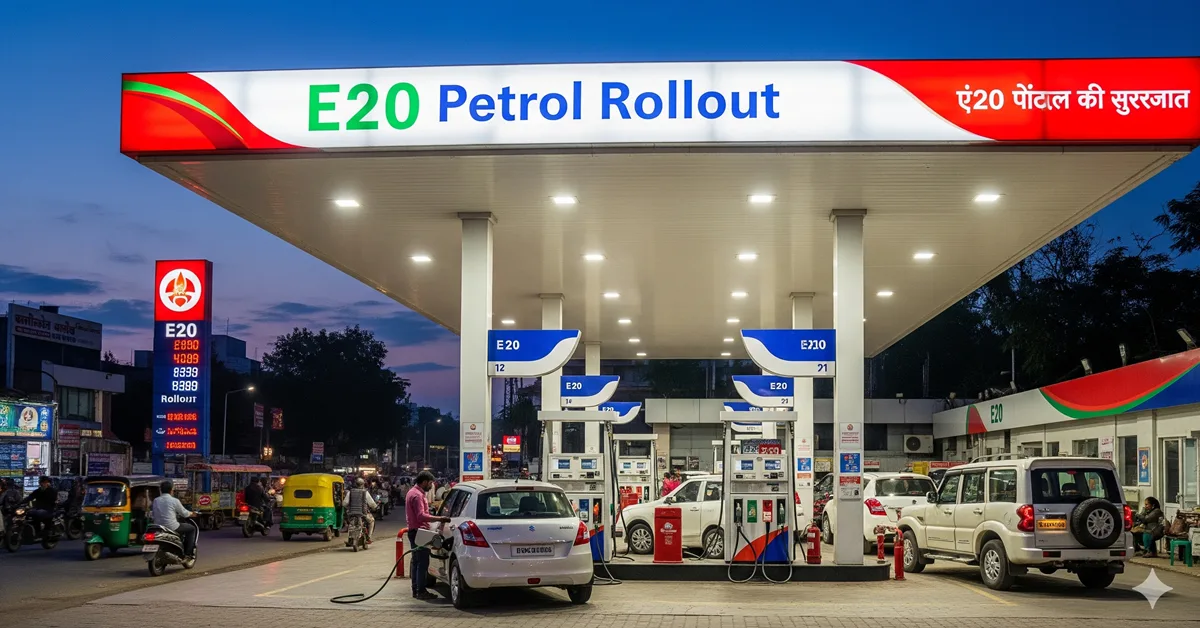
    E20 Petrol Rollout in India: Everything Vehicle Owners Must Know

    India is making a major transition towards greener fuel with the rollout of E20 petrol, a fuel blend containing 20% ethanol and 80% petrol. This shift is part of the government’s plan to reduce dependence on imported oil, boost farmer income, and cut carbon emissions. While the initiative brings multiple benefits, it also comes with certain concerns for vehicle owners, especially those with older vehicles.


    📅 Key Highlights of the E20 Petrol Rollout

    FeatureDetails
    Ethanol Content20%
    Petrol Content80%
    Launch Year2025
    Primary ObjectiveReduce carbon emissions and import dependency
    Target CoverageNearly 90,000 fuel stations across India
    Vehicle CompatibilityBS6 and newer vehicles recommended

    ✅ Benefits of E20 Petrol

    1. Environmental Benefits
      • Reduces carbon emissions significantly compared to traditional petrol.
      • Higher octane number (≈108.5) improves combustion efficiency, lowering pollutants.
    2. Economic Advantages
      • Expected savings of ₹43,000 crore annually in foreign exchange by reducing crude oil imports.
      • Creation of a new revenue stream for farmers, projected to generate ₹40,000 crore in income for 2025.
    3. Boost to Agriculture
      • Ethanol is primarily derived from sugarcane, corn, and other crops, increasing farmer income and promoting rural development.
    4. Fuel Security
      • E20 reduces reliance on imported crude, strengthening India’s energy independence.

    ⚠️ Concerns and Challenges

    1. Compatibility with Older Vehicles
      • Vehicles manufactured before 2023 may not be fully compatible with E20 fuel.
      • Potential issues:
        • Reduced Mileage: Fuel efficiency can drop by 5% to 20% in older engines.
        • Engine Wear: Ethanol can damage rubber seals, plastic parts, and fuel lines.
    2. Performance Variations
      • While newer vehicles may see improved combustion, older engines may experience slight drops in acceleration and overall performance.
    3. Limited Choice of Fuel Blends
      • With the nationwide rollout, consumers may not have the option to choose lower ethanol blends like E10, leading to adjustment challenges for some vehicles.

    🛠️ What Vehicle Owners Should Do

    StepRecommendation
    Check CompatibilityConsult the vehicle manual or manufacturer for E20 suitability.
    Monitor MileageKeep track of fuel efficiency to detect performance issues.
    Regular MaintenanceInspect rubber seals, fuel lines, and plastic components regularly.
    Upgrade if NeededOlder vehicles may benefit from engine modifications or upgrades for E20 use.
    Stay UpdatedFollow government notifications for any technical advisories.

    📊 Key Takeaways

    AspectAdvantage / Concern
    Emission ReductionUp to 30% lower than traditional petrol
    Farmer IncomePotential increase of ₹40,000 crore
    Foreign Exchange SavingsApprox. ₹43,000 crore per year
    Vehicle CompatibilityBS6 and newer vehicles recommended
    Fuel Efficiency Impact5%–20% drop in older vehicles
    Performance ChangesSlight reduction in older engines; improved efficiency in new engines

    🔍 Conclusion

    The E20 petrol rollout is a landmark step in India’s push for sustainable fuel and energy independence. While it provides significant environmental and economic benefits, vehicle owners—particularly those with older cars—must take precautions to ensure compatibility and maintain performance. Regular maintenance, careful monitoring of mileage, and consultation with manufacturers will ensure a smooth transition to this greener fuel option.

    By adopting E20 petrol, India is not only reducing carbon emissions but also supporting farmers, creating rural income, and strengthening fuel security for the nation.


  • Google Discover Secret Formula 2025: How to Go from 0 to 1M Traffic

    Google Discover Secret Formula 2025: How to Go from 0 to 1M Traffic

    Google Discover has emerged as one of the most powerful traffic sources for content creators, bloggers, and digital marketers. Unlike traditional search traffic, Discover delivers your content directly to users based on their interests, search history, and engagement patterns.

    This guide explains the secret formula to scale your website traffic from 0 to 1 million visitors using Google Discover in 2025, along with actionable strategies and examples.


    📊 What is Google Discover?

    FeatureDescription
    Content FeedPersonalized feed on Google mobile app and homepage
    Audience TargetingBased on user interests, search behavior, and engagement
    Content TypeNews, articles, videos, blogs, evergreen content
    Traffic PotentialCan deliver high volume traffic without SEO keywords

    Key Insight: Google Discover traffic does not rely on traditional search queries but focuses on user intent and behavior, making it crucial to optimize for interest-based engagement.


    🔑 Secret Formula to Scale Traffic

    1. High-Quality Visual Content
      • Use high-resolution images for every article.
      • Recommended image dimensions: 1200 × 628 pixels (minimum width 1200px).
      • Images should be relevant, visually appealing, and properly compressed to ensure fast loading.
    2. Compelling Headlines
      • Headlines must be clear, intriguing, and benefit-driven.
      • Example: Instead of “SEO Tips,” use “10 Google Discover SEO Secrets to Boost Traffic 10x.”
    3. Fresh and Evergreen Content Mix
      • Combine newsworthy topics with evergreen content.
      • Google Discover rewards frequently updated, relevant content.
    4. Mobile-First Design
      • Most Discover traffic comes from mobile users.
      • Optimize page speed, responsive design, and AMP pages.
    5. Content Engagement Signals
      • High dwell time, scroll depth, and low bounce rates improve Discover visibility.
      • Encourage interactive content like polls, quizzes, and embedded videos.
    6. Topical Authority
      • Focus on a niche and publish consistently.
      • Example: Tech blogs posting daily updates on AI, gadgets, and tools gain authority and Discover traction.

    ⚡ Example of Traffic Growth

    MonthContent PublishedDiscover ImpressionsClicksTraffic Growth
    Jan 202510 articles50,0005,0000 → 5k
    Mar 202525 articles200,00020,0005k → 25k
    Jun 202550 articles500,00060,00025k → 85k
    Sep 202580 articles1,500,000150,00085k → 250k
    Dec 2025100+ articles5,000,0001,000,000250k → 1M+

    📌 Step-by-Step Guide to Implement

    1. Identify Trending Topics
      • Use Google Trends, Exploding Topics, or your niche analytics.
    2. Create High-Quality Content
      • Long-form articles, videos, and infographics with original research.
    3. Optimize Visuals and Metadata
      • Use high-quality images with 1200 × 628 px dimensions, ALT tags, structured data, and meta descriptions.
    4. Focus on Engagement
      • Add CTAs, interactive elements, and related content links to boost time on page.
    5. Analyze and Iterate
      • Use Google Search Console > Discover report to track impressions, clicks, and CTR.
      • Update underperforming posts to increase discoverability.

    ❗ Common Mistakes to Avoid

    • Publishing low-quality content just to meet word count.
    • Ignoring mobile optimization.
    • Using clickbait headlines without delivering value.
    • Failing to update content regularly.
    • Overlooking Google Discover guidelines for images and structured data.

    ✅ Conclusion

    Scaling from 0 to 1M traffic with Google Discover in 2025 is achievable with strategic content planning, visual optimization, and engagement-focused strategies.

    The secret formula lies in consistent publishing, high-quality visuals (minimum 1200 × 628 px), mobile optimization, and understanding your audience’s interests. By following this roadmap, bloggers and marketers can unlock massive organic traffic growth without relying solely on search engine queries.


  • Fuel Ban on Overage Vehicles in Delhi-NCR: What You Need to Know

    In a significant move to combat air pollution, the Commission for Air Quality Management (CAQM) has announced a ban on fuel supply to end-of-life (EOL) vehicles in Delhi and five neighboring districts of the National Capital Region (NCR). This policy is set to take effect on November 1, 2025.


    📅 Key Details

    • Effective Date: November 1, 2025
    • Affected Areas: Delhi, Gurugram, Faridabad, Ghaziabad, Gautam Budh Nagar, and Sonipat
    • Vehicle Categories Affected:
      • Diesel vehicles older than 10 years
      • Petrol vehicles older than 15 years
    • Enforcement Mechanism: Fuel stations will utilize Automated Number Plate Recognition (ANPR) systems to identify and deny fuel to non-compliant vehicles.

    🛠️ Enforcement and Implementation

    The implementation of this ban has been postponed from the initial date of July 1, 2025, to November 1, 2025, to address operational and infrastructural challenges. The delay allows for the installation and calibration of ANPR systems at fuel stations and ensures better coordination among enforcement agencies. The ban will be enforced uniformly across Delhi and the five NCR districts to avoid any cross-border fueling issues.


    ⚠️ Penalties for Non-Compliance

    Vehicles found violating the fuel ban will face strict penalties, including:

    • Denial of Fuel: Immediate refusal of fuel at petrol stations.
    • Fines: Monetary penalties as prescribed under the Registered Vehicle Scrapping Facility (RVSF) Rules, 2021.
    • Impoundment: Seizure of vehicles found in violation, leading to potential scrapping.

    🚗 Impact on Vehicle Owners

    Owners of EOL vehicles are advised to take the following steps:

    • Verify Vehicle Age: Check the registration certificate to confirm the vehicle’s age.
    • Consider Scrapping: Explore options for scrapping the vehicle through authorized centers.
    • Upgrade to Cleaner Alternatives: Consider transitioning to electric or CNG vehicles to comply with environmental standards.

    📊 Summary Table

    Vehicle TypeAge LimitAffected AreasEnforcement Date
    Diesel>10 yearsDelhi, Gurugram, Faridabad, Ghaziabad, Gautam Budh Nagar, SonipatNovember 1, 2025
    Petrol>15 yearsDelhi, Gurugram, Faridabad, Ghaziabad, Gautam Budh Nagar, SonipatNovember 1, 2025

    ❓ Frequently Asked Questions (FAQs)

    Q1: What is an end-of-life (EOL) vehicle?

    An EOL vehicle is one that has surpassed its recommended lifespan, making it more prone to emissions and less fuel-efficient.

    Q2: How will the fuel ban be enforced?

    Fuel stations will use ANPR systems to identify EOL vehicles and deny them fuel.

    Q3: Are there any exemptions to this ban?

    Currently, the ban applies to all diesel and petrol vehicles exceeding the specified age limits.

    Q4: What should I do if my vehicle is affected?

    Consider scrapping the vehicle through authorized centers or upgrading to a cleaner alternative like an electric or CNG vehicle.


    The implementation of the fuel ban on EOL vehicles is a crucial step towards improving air quality in Delhi-NCR. Vehicle owners are encouraged to comply with the new regulations to contribute to a cleaner and healthier environment.


  • Last-Minute ITR Filing 2025: Complete Guide for Taxpayers Before September 15

    The deadline for filing Income Tax Returns (ITR) for Assessment Year 2025-26 is fast approaching. Taxpayers have only a few days left to file their returns for the Financial Year 2024-25. Late filing can lead to penalties, interest on unpaid taxes, and loss of benefits like carry-forward of losses.

    This guide provides a comprehensive checklist, step-by-step instructions, and tips to help taxpayers complete last-minute ITR filing efficiently and correctly.


    📄 Essential Documents Required for ITR Filing

    Before filing your return, gather the following documents:

    DocumentPurpose
    Form 16Salary details and TDS by employer
    Form 26ASConsolidated tax credit and TDS information
    Annual Information Statement (AIS)Comprehensive view of all financial transactions
    Bank StatementsFor interest income and other income verification
    Investment ProofsFor claiming deductions under 80C, 80D, 80G, etc.
    Aadhaar & PANIdentity and tax verification
    Other Income DocumentsRental income, capital gains, dividends, etc.

    Steps for Last-Minute ITR Filing

    1. Log in to the Income Tax Portal
      • Use PAN/Aadhaar and password or net banking credentials.
    2. Select the Correct ITR Form
      • Choose the form based on your income sources (salary, business, capital gains, etc.).
    3. Verify Pre-Filled Information
      • Ensure details like salary, TDS, and bank interest are accurate.
    4. Add Missing Income and Deductions
      • Include all income sources and eligible deductions under Sections 80C, 80D, 80G, 24(b), etc.
    5. Choose Tax Regime
      • Decide between the old tax regime (with exemptions and deductions) or the new tax regime (lower rates but fewer deductions).
    6. Submit and E-Verify
      • Return is only valid after e-verification via OTP (Aadhaar, net banking, bank account, or demat account).

    ⚠️ Consequences of Late Filing

    AspectDetails
    Late Fee₹1,000 if income ≤ ₹5 lakh; ₹5,000 if income > ₹5 lakh
    Interest1% per month under Section 234A on unpaid taxes
    Loss of Carry ForwardCannot carry forward losses such as capital loss or business loss
    Delayed RefundsProcessing of refunds may be delayed

    🛠️ Tips for Last-Minute ITR Filing

    • Check TDS/TCS: Reconcile with Form 26AS to avoid mismatches.
    • Verify Income and Deductions: Ensure all eligible deductions are included.
    • File the Correct ITR Form: Incorrect form selection can lead to rejections.
    • Cross-Check Bank and PAN Details: Accurate details prevent refund issues.
    • Submit Early to Avoid Portal Traffic: Last-minute rush can slow down the e-filing portal.

    🧾 Common Mistakes to Avoid

    1. Filing with the wrong ITR form.
    2. Missing bank account details.
    3. Leaving out deductions under eligible sections.
    4. Forgetting to e-verify the return.
    5. Entering incorrect income details or TDS amounts.

    📌 Frequently Asked Questions (FAQs)

    Q1: Can I file my ITR after September 15, 2025?

    • Yes, you can file a belated return by December 31, 2025, but penalties and interest will apply.

    Q2: What penalties apply for late filing?

    • A late fee of ₹1,000 for income ≤ ₹5 lakh and ₹5,000 for income > ₹5 lakh, plus 1% monthly interest on unpaid tax.

    Q3: What happens if I miss the belated return deadline?

    • You can file a revised return under Section 139(5) within four years from the end of the assessment year.

    Q4: How can I e-verify my ITR?

    • Using Aadhaar OTP, net banking, bank account OTP, or demat account OTP.

    Q5: What if I do not file my ITR at all?

    • Non-filing leads to penalties, loss of carry-forward benefits, and delayed refunds.

    🏁 Conclusion

    With only a few days left for filing ITR for AY 2025-26, it is crucial to act immediately. Proper preparation, cross-checking documents, and e-verification can help taxpayers avoid penalties and ensure smooth compliance.

    Last-minute ITR filing can be stress-free if you follow the above guide and double-check all details before submission.


  • India Advances Towards Historic ₹2 Lakh Crore Deal for 114 ‘Made in India’ Rafale Jets

    India is moving forward with a historic defense procurement proposal for 114 Rafale fighter jets, in collaboration with French aerospace giant Dassault Aviation. Valued at over ₹2 lakh crore, this initiative not only strengthens the Indian Air Force’s (IAF) operational capabilities but also aligns with the ‘Make in India’ policy, emphasizing domestic production and technological self-reliance.

    The deal is under review by the Ministry of Defence, and if approved, it will mark one of the largest defense acquisitions in India’s history.


    Overview of the Proposed Rafale Deal

    ParameterDetails
    Total Jets114 Rafale fighter jets
    Estimated ValueOver ₹2 lakh crore
    Indigenous ContentOver 60% produced in India
    ManufacturersDassault Aviation (France) and Indian aerospace firms
    Existing Fleet36 Rafale jets already in service with IAF
    Additional Orders26 Rafale Marine jets for Indian Navy

    Key Takeaways:

    • This acquisition will expand the IAF’s fleet significantly.
    • Domestic production will boost Make in India initiatives.
    • Strategic collaboration with French aerospace companies ensures advanced technology transfer.

    Strategic Objectives

    1. Boosting Indigenous Manufacturing

    • Over 60% of the components of these jets will be manufactured in India.
    • Enhances self-reliance in defense production.
    • Reduces dependence on foreign suppliers, supporting national security.

    2. Enhancing Operational Capabilities

    • Advanced Rafale jets feature state-of-the-art avionics, weapons systems, and stealth technology.
    • Fleet expansion strengthens combat readiness and air dominance.

    3. Job Creation & Technological Advancement

    • Collaboration with Indian firms is expected to generate thousands of jobs.
    • Technology transfer will foster innovation in the domestic defense sector.
    • Example: Safran Aerospace plans a new facility in Hyderabad for engine maintenance, creating 150 jobs initially, potentially expanding to 750 jobs.

    Procurement Process

    StepDescription
    Ministry ReviewThe Defence Ministry reviews the proposal and assesses feasibility.
    Defence Finance DivisionEvaluates financial implications of the deal.
    Defence Procurement Board (DPB)Discusses technical and operational aspects of the proposal.
    Defence Acquisition Council (DAC)Chaired by Defence Minister for final approval.

    Once approved, this deal will be a milestone in India’s defense modernization.


    Broader Implications

    AreaImpact
    Bilateral TiesStrengthens India-France defense collaboration.
    National SecurityEnhances India’s combat capabilities and strategic deterrence.
    Defense IndustryEncourages domestic manufacturing and technology innovation.
    EmploymentCreates skilled jobs across aerospace and defense sectors.

    This deal also reinforces India’s blue-water capabilities, especially with the Rafale Marine jets for carrier operations.


    FAQs

    1. How many Rafale jets are being proposed in this deal?

    • The proposal is for 114 jets, with over 60% produced in India.

    2. What is the estimated cost of the deal?

    • The deal is valued at over ₹2 lakh crore, making it one of the largest in Indian defense history.

    3. How does this deal support ‘Make in India’?

    • More than 60% of components will be manufactured domestically, promoting self-reliance and indigenous technology development.

    4. Will this improve India’s defense capabilities?

    • Yes, the addition of 114 advanced Rafale jets will significantly enhance combat readiness, operational flexibility, and air superiority.

    5. Are there any additional orders for the Indian Navy?

    • Yes, 26 Rafale Marine jets have already been ordered for carrier-based operations.

    6. When will the deal be finalized?

    • The proposal is under review, and it must pass through the Ministry of Defence, Defence Finance Division, DPB, and DAC before final approval.

    7. What impact will this deal have on jobs in India?

    • The deal is expected to generate thousands of jobs in aerospace manufacturing, maintenance, and defense technology sectors.

    Conclusion

    The proposed ‘Made in India’ Rafale deal represents a major step forward in strengthening India’s defense capabilities, boosting domestic manufacturing, and fostering strategic international partnerships.

    By combining advanced technology, domestic production, and skilled employment opportunities, this initiative embodies the vision of self-reliance in defense while preparing the IAF for future challenges.


  • Income Tax Law for Senior and Super Senior Citizens: Key Updates for AY 2025-26

    For the Assessment Year (AY) 2025-26, the Indian government has introduced several modifications to the Income Tax Act to provide financial relief to senior citizens (aged 60–79 years) and super senior citizens (aged 80 years and above). These changes aim to simplify tax compliance and enhance savings for the elderly population.


    📊 Income Tax Slabs for AY 2025-26

    Old Tax Regime

    Age GroupIncome Up to ₹3,00,000₹3,00,001 – ₹5,00,000₹5,00,001 – ₹10,00,000Above ₹10,00,000
    Senior Citizens (60–79)₹3,00,0005%20%30%
    Super Senior Citizens (80+)₹5,00,00020%30%

    Note: The new tax regime does not offer higher exemption limits for senior or super senior citizens.


    💡 Key Benefits for Senior and Super Senior Citizens

    1. Higher Basic Exemption Limits

    • Senior Citizens (60–79 years): ₹3,00,000
    • Super Senior Citizens (80 years and above): ₹5,00,000

    These limits apply under the old tax regime and are higher than the standard exemption limit of ₹2,50,000 for individuals below 60 years.

    2. Form 15H for Non-Deduction of TDS

    Senior citizens can submit Form 15H to financial institutions to ensure that Tax Deducted at Source (TDS) is not deducted on interest income, provided their total income is below the taxable limit.

    3. Advance Tax Exemption

    Senior citizens without business income are exempt from paying advance tax, reducing the compliance burden.

    4. Standard Deduction

    A standard deduction of ₹50,000 is available for pension and salary income under the old tax regime.

    5. Enhanced Deductions Under Sections 80D, 80DD, and 80DDB

    • Section 80D: Higher deductions for health insurance premiums or medical expenses.
    • Section 80DD: Deductions for maintenance and treatment of dependents with disabilities.
    • Section 80DDB: Enhanced deductions for treatment of specified diseases.

    6. Interest Income Exemption

    A higher limit of exemption on interest from banks and post offices is available for senior citizens.

    7. Manual Filing Option

    Eligible senior citizens may file their income tax returns manually, providing convenience for those less familiar with digital platforms.

    8. Reverse Mortgage Income Tax Exemption

    Income from transferring property under the reverse mortgage scheme is tax-exempt, offering financial security to senior citizens.

    9. Exemption from Filing ITR

    Under specified conditions, some senior citizens are exempt from filing income tax returns, reducing administrative burdens.


    🧾 Filing Options: Old vs. New Tax Regime

    Senior and super senior citizens have the option to choose between the old and new tax regimes:

    • Old Tax Regime: Offers various exemptions and deductions but has higher tax rates.
    • New Tax Regime: Features lower tax rates but does not allow for exemptions and deductions.

    Taxpayers can opt for the regime that results in lower tax liability.


    ✅ Conclusion

    The updates to the Income Tax Act for AY 2025-26 provide significant benefits to senior and super senior citizens, aiming to ease their financial burdens and encourage savings. By understanding these provisions, elderly taxpayers can make informed decisions to optimize their tax liabilities.


  • National Lok Adalat 2025: A Nationwide Opportunity to Settle Traffic E-Challans

    On 13th September 2025, India is set to host the National Lok Adalat, a special initiative aimed at providing vehicle owners an opportunity to resolve their pending traffic e-challans. This nationwide event is organized to alleviate the burden on the judicial system by addressing minor traffic violations outside traditional courtrooms.


    📌 What is the National Lok Adalat?

    The National Lok Adalat is a forum established under the Legal Services Authorities Act, 1987, to facilitate the amicable settlement of disputes through conciliation and compromise. It serves as an alternative dispute resolution mechanism, offering a platform for resolving various types of cases, including traffic violations.


    ✅ Eligible Traffic Violations for Settlement

    Vehicle owners can avail themselves of this opportunity to settle the following common traffic violations:

    • Riding without a helmet
    • Not wearing a seat belt
    • Over-speeding
    • Illegal parking
    • Lack of Pollution Under Control (PUC) certificate
    • Driving without a valid license
    • Driving without a number plate
    • Driving in the wrong lane

    However, it’s important to note that serious offences such as:

    • Drunk driving
    • Hit-and-run incidents
    • Death caused by negligent driving
    • Driving by minors
    • Unauthorized racing or speed trials
    • Vehicles involved in criminal activities

    are excluded from this settlement initiative.


    📝 Step-by-Step Guide to Resolve Traffic E-Challans

    To make the most of the National Lok Adalat, follow these steps:

    1. Check Eligibility

    Ensure that your traffic violation is eligible for settlement under the National Lok Adalat. Only minor, compoundable offences are considered.

    2. Gather Necessary Documents

    Prepare the following documents:

    • Appointment letter (printed copy)
    • Token number
    • Original documents, including vehicle papers and challan receipts

    3. Register Online

    In cities like Delhi, Maharashtra, and Karnataka, vehicle owners can register online through their respective traffic police websites. Registration typically opens a few days before the event.

    4. Visit the Designated Court

    On the scheduled date, visit the designated court premises in your city. It’s advisable to arrive at least one hour before your allotted time. Some centres may also accept walk-in cases depending on availability.

    5. Settlement Process

    At the court, present your documents and challan details. A conciliator will assist in resolving the matter, and if eligible, you may receive a reduced fine or complete waiver.


    🏛️ Lok Adalat Sessions in Key Cities

    CityVenue(s)
    DelhiDwarka Court, Tis Hazari Court, Rohini Court, Rouse Avenue Court, Karkardooma Court, Patiala House Court, Saket Court
    MaharashtraSessions held across various districts and talukas
    KarnatakaSessions in cities like Mangaluru, Belthangady, Puttur, Moodbidri, and Sullia

    Please check with your local traffic police or district legal services authority for specific venues and timings.


    ⚠️ Important Considerations

    • Time Sensitivity: The National Lok Adalat is a one-day event. Ensure you attend on 13th September 2025.
    • Eligibility: Only minor, compoundable traffic violations are eligible for settlement.
    • Documentation: Carry all required documents to avoid delays.
    • State-Specific Rules: Procedures may vary by state. Confirm details with local authorities.

    💡 Benefits of Participating

    • Financial Relief: Avail discounts or waivers on pending fines.
    • Legal Compliance: Clear your record of minor traffic violations.
    • Judicial Efficiency: Help reduce the backlog of cases in the judicial system.

    📌 Conclusion

    The National Lok Adalat 2025 presents a valuable opportunity for vehicle owners across India to resolve their pending traffic e-challans efficiently and cost-effectively. By following the outlined steps and ensuring eligibility, you can take advantage of this initiative to settle your traffic violations and contribute to a more streamlined judicial process.

    Remember to check with your local traffic police or district legal services authority for specific details pertaining to your city.


  • Chaos at Yerwada Lok Adalat: Pune Citizens Rush for 50% Traffic Fine Waiver

    A special Lok Adalat session in Yerwada, Pune, intended to provide relief to thousands of motorists by offering a 50% waiver on pending traffic fines, spiraled into chaos as citizens crowded the venue. The promise of reduced penalties drew an overwhelming response, exposing gaps in crowd management and digital readiness.

    This article explains what happened, how the scheme was supposed to work, why it turned chaotic, and what motorists should know about such waivers in future.


    What is a Lok Adalat?

    A Lok Adalat is a people’s court or alternative dispute resolution forum set up under the Legal Services Authorities Act. It allows for speedy, low-cost resolution of disputes — from petty offences to pending fines. In Pune’s case, it was meant to ease the burden of unpaid traffic challans.


    Event Overview

    AspectDetails
    LocationYerwada, Pune
    OccasionSpecial Lok Adalat Session
    PurposeOffer 50% waiver on pending traffic fines
    Citizens’ ResponseThousands queued up, overwhelming counters
    OutcomeCongestion, long waiting hours, frustration among citizens

    Why the 50% Waiver was Offered

    • To clear a large backlog of unpaid traffic challans.
    • To give citizens an opportunity to settle dues at reduced cost.
    • To boost compliance and decongest court dockets related to traffic offences.

    How it was Supposed to Work

    StepPlanned ProcessIntended Benefit
    1. RegistrationCitizens register for the waiver through online or physical tokens.Organized queueing and data capture.
    2. VerificationTraffic police verify challan details.Ensures correct waiver application.
    3. Payment of Reduced FineCitizens pay 50% of the total pending amount.Immediate settlement and clearance.
    4. Receipt & ClearanceDigital or paper receipt issued.Proof of payment; updated records.

    What Actually Happened

    • Overwhelming Footfall: Thousands of motorists turned up simultaneously.
    • Insufficient Counters: Limited staff and counters led to bottlenecks.
    • Token Shortage: Tokens ran out quickly; many citizens left frustrated.
    • Long Waiting Times: People stood for hours in queues, leading to public unrest.
    • Traffic Around Venue: Ironically, heavy traffic jams occurred near the Lok Adalat site itself.

    Challenges Highlighted

    ChallengeImpact
    Poor Crowd ManagementLong queues, confusion and anger among citizens.
    Limited Awareness of Online OptionsMany unaware they could pre-register or pay digitally.
    Insufficient Staff & InfrastructureDelays in verification and payment processing.
    Lack of Clear CommunicationMixed signals on eligibility, deadlines, and process.

    Lessons for Future Waiver Drives

    • Advance Digital Registration: Encouraging citizens to register online can ease crowding.
    • Staggered Slots: Allot time slots to reduce peak-hour congestion.
    • More Counters & Staff: Scaling resources proportionally to expected turnout.
    • Real-time Updates: Use SMS, apps, and social media to communicate token status and waiting times.
    • Public Education: Clear instructions on what documents to carry and how to avail benefits.

    Benefits of Traffic Fine Waivers

    BenefitExplanation
    Clears BacklogReduces the number of pending challans in the system.
    Boosts ComplianceEncourages citizens to clear dues voluntarily.
    Revenue GenerationEven at 50%, mass payments generate significant revenue for civic bodies.
    Promotes GoodwillCitizens feel incentivized and less resentful.

    Conclusion

    The Yerwada Lok Adalat’s attempt to provide relief to Pune motorists underscores both the popularity and pitfalls of mass traffic fine waivers. While the idea of reducing penalties attracts huge participation, successful implementation depends on robust planning, digital infrastructure, and transparent communication. Future drives can learn from this episode to strike the right balance between citizen convenience and administrative efficiency.


  • 15 Easy Nano Banana Prompts & Tips to Turn Any Image Into a 3D Model with Google AI Studio

    The Nano Banana trend is taking social media by storm. Using Google AI Studio’s newest image model, everyday photos can be transformed into hyper-realistic 3D figurines — like miniature collectibles, plush toys, or futuristic holograms. The process is so simple that even non-designers can create professional-looking visuals in seconds.

    This article gives you 15 easy prompts and practical tips to generate stunning 3D models from your images.


    What Is the Nano Banana Feature?

    Nano Banana is a nickname for Google AI Studio’s advanced image generator. It specialises in turning 2D photos into realistic 3D-style figurines with textures, shadows, and props. Users love it because it’s:

    • Fast – results in seconds.
    • Flexible – many styles: realistic, anime, plush, holographic, retro pixel art.
    • Fun – perfect for social posts, marketing, or personal keepsakes.

    Table: Nano Banana at a Glance

    FeatureDescriptionBenefit
    3D Figurine StyleConverts 2D images into toy-like 3D models.Eye-catching visuals.
    Multiple StylesRealistic, plush, anime, hologram, retro.Creative freedom.
    Fast GenerationFew seconds per image.Time saver.
    Easy PromptsJust type what you want.No design skills needed.

    15 Easy Prompts to Try

    Here are ready-made prompts you can copy and paste into Google AI Studio. Replace “person/pet” with your subject:

    1. “Create a 1/7 scale realistic figurine of the person in the photo on a round transparent acrylic base with a toy box next to it.”
    2. “Make a cute plush toy version of the person in the image with oversized head and soft fabric textures.”
    3. “Turn my pet into a designer collectible with a mini bed and playful pose.”
    4. “Render a businessperson figurine at a desk holding a laptop with books stacked nearby.”
    5. “Create a futuristic holographic figurine with glowing edges and a sci-fi background.”
    6. “Transform this image into a retro pixel art 16-bit style character on a platform game background.”
    7. “Make a fantasy warrior toy holding a sword with magical forest effects around.”
    8. “Generate an anime-style figurine with bright colours and exaggerated features.”
    9. “Design a sports star collectible on a mini stadium with a trophy accessory.”
    10. “Create a plush chibi version of the subject sitting on a cloud.”
    11. “Turn this person into a steampunk miniature with gears and copper pipes.”
    12. “Produce a hologram-style desk figure with transparent glowing lines.”
    13. “Make a historic figure model with period costume and an old map background.”
    14. “Reimagine the photo as a cartoon character figurine with oversized shoes and props.”
    15. “Create a celebrity-style red carpet figurine with flashbulbs and fans in the background.”

    Tips for Better Results

    TipWhy It Works
    Use High-Quality PhotosClear, well-lit images allow the AI to capture facial details accurately.
    Be Specific in PromptsInclude pose, style, background, props, and lighting to guide the AI.
    Experiment with StylesTry plush, anime, hologram, or retro to see which suits your subject best.
    Add PropsAccessories like trophies, swords, or books make the scene more dynamic.
    Refine and RegenerateSmall prompt changes can dramatically improve results.
    Test Different AnglesUpload different photos of the same subject for varied outputs.

    Why It Matters

    • Personal Use: Create keepsakes or unique profile images.
    • Content Creators: Generate eye-catching visuals for posts and stories.
    • Brands: Mock up collectible-style merchandise before production.

    Conclusion

    With these 15 prompts and pro tips, anyone can harness the Nano Banana trend to transform simple photos into striking 3D models using Google AI Studio. It’s fast, fun, and opens up new creative possibilities for individuals and businesses alike.


  • What Happens if You Don’t Pay Taxes in India — Complete Guide

    Paying taxes is a legal obligation for residents, businesses, and individuals who cross certain income or turnover thresholds in India. Failing to pay taxes can lead to serious financial, legal, and reputational consequences. This article explains what can happen, how penalties work, legal actions possible, with examples, so you know the risks and how to stay compliant.


    Key Consequences of Not Paying Taxes

    ConsequenceDescriptionLegal/Statutory BasisPossible Severity
    Interest on Unpaid TaxTax unpaid by due date accrues interest until it’s paid.Sections under Income Tax Act (e.g. late payment interest)Moderate to high, depending on how long you delay.
    Penalties / FinesAdditional charges applied for late filing, non-filing, under-reporting, concealment of income.Sections 234A, 234F, 270A, 276C etc.Could be substantial (50-200% or more of tax evaded in cases of misreporting).
    Loss of BenefitsIncluding loss of ability to carry forward losses, claim deductions, or get refunds.Income Tax Act provisions about belated returns, filing deadlines.Financially burdensome, especially for businesses.
    Legal / Criminal ActionFor willful evasion of tax, false statements, or concealment.Penal provisions under Income Tax Act (e.g. Section 276C)Jail terms possible; often reserved for serious / repeated evasion.
    Asset Attachment / ProsecutionSeizure of bank accounts, property, or other assets to recover dues.Department can issue notices, attach property, etc.Severe; loss of assets and legal costs.
    Reputational DamagePublic records, litigation can affect personal/business reputation.Not always codified but real risk in business life.Medium to high, especially for companies.

    Major Legal Provisions & Penalties

    Here are some of the laws under Indian tax rules that deal with non-payment, evasion, and misreporting:

    • Section 234A & 234B & 234C: Interest for delay in filing ITR or for defaults in paying advance taxes.
    • Section 234F: Fee for late filing of income tax return.
    • Section 270A: Penalty for under-reporting or misreporting income.
    • Section 276C: Penal action and imprisonment for willful tax evasion.
    • Penalties for non-maintenance of books, false entries, fake invoices: These attract strict financial penalties, sometimes proportional to the magnitude of evasion.

    Examples

    1. Example: Delay in Filing ITR
      Rahul is a salaried employee whose total income exceeds the taxable limit. The due date for filing is July 31, but he files in December. He will face:
      • Late filing fee under Section 234F (could be up to ₹5,000 or more depending on income).
      • Interest under Section 234A on any tax due.
      • Some loss of ability to carry forward losses (if he had any business or capital losses) because of belated return rules.
    2. Example: Under-Reporting of Income
      A small business owner claims lower income than actual, hiding cash sales. On audit, the income tax department discovers this:
      • They will assess the correct income, collect unpaid tax.
      • Impose penalty under Section 270A: maybe 50% of the tax on under-reported income.
      • If misreporting is more severe, penalty could be higher, possibly up to 200% in certain cases.
      • Might also initiate prosecution if willful and large in magnitude.
    3. Example: Non-payment of Tax Demand
      Suppose Divya receives a demand notice from tax authorities specifying tax due. She ignores it:
      • Interest keeps accruing.
      • Penalties may be added.
      • Authorities can attach her assets (bank accounts, property) or freeze them to recover dues.
      • In severe cases, criminal proceedings.

    How Penalties & Interest Accumulate

    • Interest Rate: Usually, simple interest per month or part thereof on the unpaid tax amount. The rate depends on which section (e.g. late payment, default in advance tax).
    • Penalty Percentage: Varies depending on nature of default: Type of DefaultPenalty Rate (approx)Under-reporting / Misreporting50% of tax on under-reported income; higher (100-200%) if misreporting serious or concealment.False entries / fake invoicesPenalties often equal to sum of such entries, plus tax and interestNon-deduction/non-collection of TDS/TCSPenalties can be equal to amount not deducted/collected, plus other feesNon-filing / Late Filing FeeFixed amounts (e.g. upto ₹5,000/₹10,000 depending on income) under Section 234F
    • Criminal Liability: If tax evasion is deliberate & over certain thresholds, punishment can include imprisonment (ranges vary, e.g. several months to 7 years) and fines.

    Risks Beyond Money

    • Audit / Scrutiny: Once you default, your profile may attract more scrutiny in future years. Authorities may audit past years.
    • Difficulty in Loans / Finance: Banks and financial institutions often require proof of tax compliance – missing returns or demands unresolved can hamper credit.
    • Legal / Personal Stress: Notices, court cases, attachments cause time, legal cost, reputation issues.
    • Loss of Government Schemes / Tender Eligibility: Some government tenders or schemes demand tax compliance certificates; non-payment may disqualify you.

    How to Manage if You Can’t Pay Immediately

    • File returns on time even if you can’t pay full tax; better to owe than not file.
    • Pay what you can to reduce interest & penalties.
    • Seek instalment or payment-plan options with the tax department. Sometimes authorities permit spreading payments under certain schemes.
    • Respond to notices promptly — ignoring them worsens the situation.
    • Consult a chartered accountant / tax lawyer: sometimes honest mistakes can be rectified with less severe penalties.

    FAQs

    Q1. What happens if I don’t file Income Tax Return (ITR) at all?
    You risk: late filing fees, inability to carry forward losses, more scrutiny, possible penalties, and if income is above threshold, legal consequences.

    Q2. If I file belated return, can I avoid penalty?
    Some fees or interest are unavoidable; penalty for late filing and interest on tax due will still apply. Filings late is better than not filing at all.

    Q3. How much is penalty for under-reporting income?
    Typically 50% of tax on under-reported portion; if misreporting or concealment is serious, up to 200% or more depending on law/statute.

    Q4. Can my assets be attached if I owe tax?
    Yes. The tax department can issue notices, freeze bank accounts, or attach movable or immovable property to recover tax dues.

    Q5. Is imprisonment possible for evading taxes?
    Yes, in serious cases. Willful evasion, large scale concealment, submitting false documents etc., can lead to criminal prosecution and imprisonment under relevant sections of the Income Tax Act.

    Q6. Is there any relief if one defaults due to genuine reasons or inability to pay?
    Sometimes tax authorities allow schemes, instalments, or waivers of portions of penalty in case of genuine hardship. Being proactive helps.


    Conclusion

    Taxes are not optional — they fund public goods, infrastructure, welfare, etc. The laws in India are clear: not paying taxes, delaying filings, or under-reporting income have material risks: monetary, legal, and reputational. Better to stay compliant, file returns, pay on time or reach out for assistance if you cannot.

    If you like, I can draft a blog post based on this too, or suggest how to check if you might be at risk of penalties in your case.